In today’s fast-paced business environment, efficient logistics and supply chain management are critical for organizational success. With India’s logistics sector booming, professionals and students alike are exploring logistics courses to build a rewarding career. From logistics courses online to advanced logistics degree courses, there are multiple pathways to gain industry-relevant skills.
Whether you are a fresh graduate or a working professional, pursuing logistics and supply chain management courses online or in-campus can open doors to exciting roles in operations, procurement, transportation, and distribution.
What Are Logistics Courses?
Logistics courses are specialized programs designed to teach planning, organizing, and managing the flow of goods, information, and resources efficiently. These programs cover key areas such as transportation, warehousing, inventory management, demand forecasting, and distribution.
Popular alternatives include:
- Supply chain and logistics courses
- Logistics and supply chain management courses
- Supply chain management courses with placement
- Logistics certification course
Such programs aim to prepare professionals to meet the growing demands of the logistics industry.
Types of Logistics Courses in India
India offers a wide range of logistics related courses to suit different career needs:
- Certificate Courses – Short-term skill-building programs in logistics operations and supply chain fundamentals.
- Diploma Courses – Cover practical aspects of logistics and inventory management in 6–12 months.
- Post Graduate Diploma / PGDM in Logistics – Advanced programs for career growth and managerial roles.
- Logistics Degree Courses – Undergraduate and postgraduate programs in logistics and supply chain management.
- Online Logistics Courses – Flexible programs for working professionals and remote learners.
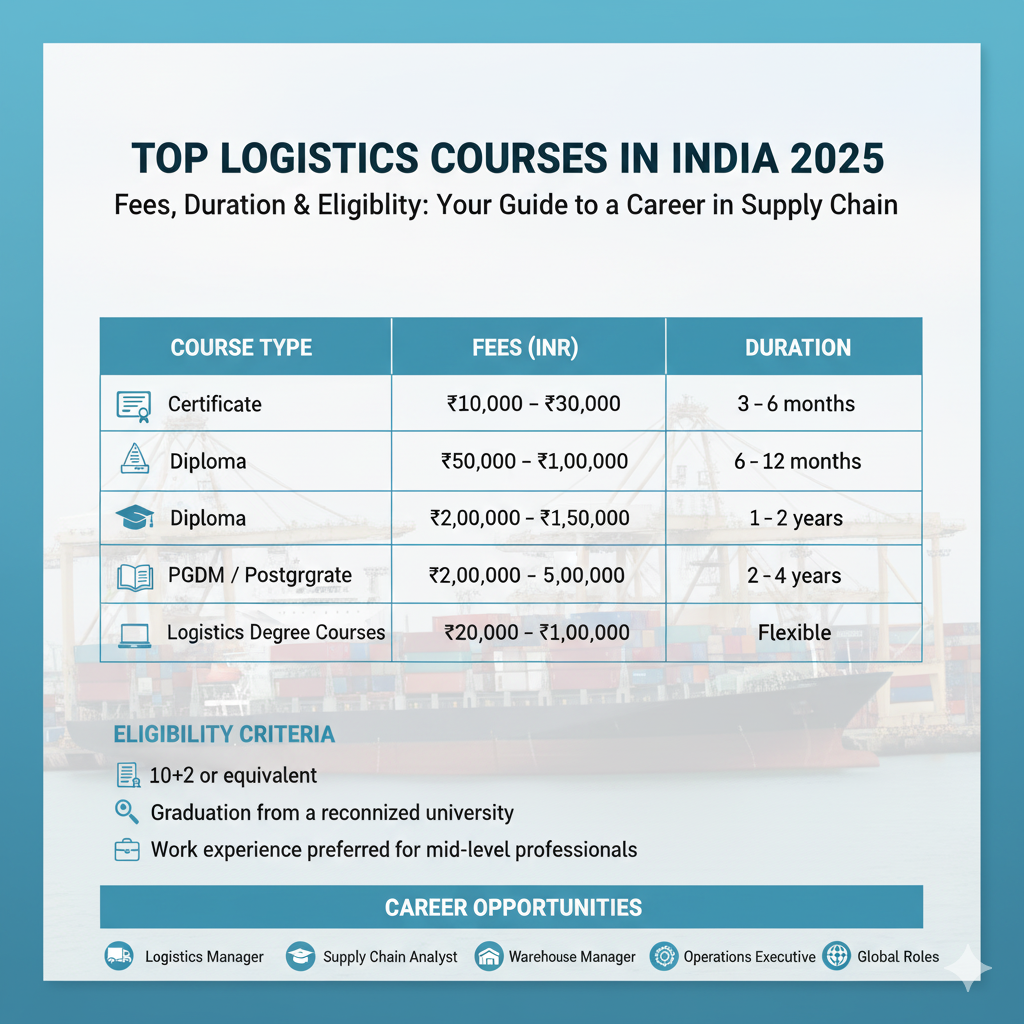
Top Logistics Courses in India 2025-26
Some of the leading institutions offering logistics and supply chain management courses include:
- MIT School of Distance Education (MITSDE) – PGDM in Logistics and Supply Chain Management, with placement support
- Indian Institute of Logistics (IIL) – Diploma and certificate programs
- Symbiosis Institute of Business Management (SIBM) – MBA/PGDM in Logistics and Operations
- IGNOU / Amity Online / NMIMS Global – Online logistics courses online and supply chain and logistics courses
- NIIT Imperia / CII Institute of Logistics – Executive certifications and professional courses
Fees and Duration
Course Type | Fees (INR) | Duration |
Certificate Courses | ₹10,000 – ₹30,000 | 3–6 months |
Diploma Courses | ₹50,000 – ₹1,00,000 | 6–12 months |
PGDM / Postgraduate Courses | ₹1,00,000 – ₹2,50,000 | 1–2 years |
Logistics Degree Courses | ₹2,00,000 – ₹5,00,000 | 2–4 years |
Online Courses | ₹20,000 – ₹1,00,000 | Flexible |
Eligibility Criteria
- Certificate/Diploma Courses: 10+2 or equivalent
- PGDM / Logistics Postgraduate Programs: Graduation from a recognized university
- Executive Programs / Online Courses: Work experience preferred for mid-level professionals
- Entrance exams may apply for selective programs
Career Opportunities After Logistics Courses
Completing supply chain and logistics courses or supply chain management courses with placement can open multiple career paths, including:
- Logistics Manager
- Supply Chain Analyst
- Warehouse & Inventory Manager
- Operations Executive
- Procurement Specialist
- Transport & Distribution Manager
Industries hiring logistics professionals include e-commerce, FMCG, manufacturing, retail, and shipping.
Why Choose Logistics and Supply Chain Management Courses in 2025-26?
- India’s logistics sector is growing rapidly, driven by e-commerce and global trade
- Certifications and degrees enhance credibility and career prospects
- Online logistics courses online provide flexibility for working professionals
- Institutes offering supply chain management courses with placement ensure job readiness
By gaining industry-relevant skills through logistics certification courses or advanced logistics and supply chain management courses, professionals can position themselves as leaders in supply chain operations.
Conclusion
With the increasing demand for skilled logistics professionals, pursuing logistics courses, whether in-person or online, is a smart investment for career growth. From foundational programs to advanced logistics degree courses, there are options for every career stage.
Explore top logistics and supply chain management courses online today, gain practical skills, and take a step toward a successful career in supply chain and logistics.