
Thinking about building a career in finance but not sure where to start? You’re not alone. Many students feel confused about what skills they actually need to succeed in this field. That’s where PGDM Finance comes in.
A PGDM in Finance doesn’t just teach theory—it prepares you with real-world, job-ready skills. Whether you want to become an investment analyst, financial planner, or corporate finance expert, this program equips you with the tools to grow.
Let’s break it down in a simple way, so you know exactly what you’ll learn and why it matters.
What is Finance Management?
Finance Management is all about managing money smartly—whether for a business or an individual. It includes:
- Planning how to use money
- Managing investments
- Controlling costs
- Maximizing profits
In simple words, it helps answer questions like:
- Where should money be invested?
- How can risks be reduced?
- How can profits be increased?
Why is Finance Management Important?
Finance is the backbone of every business. Without proper financial planning, even a good business idea can fail.
Here’s why it matters:
- Helps businesses grow sustainably
- Ensures better decision-making
- Reduces financial risks
- Improves profitability
- Supports long-term planning
For professionals, strong finance skills mean better career opportunities and higher salaries.
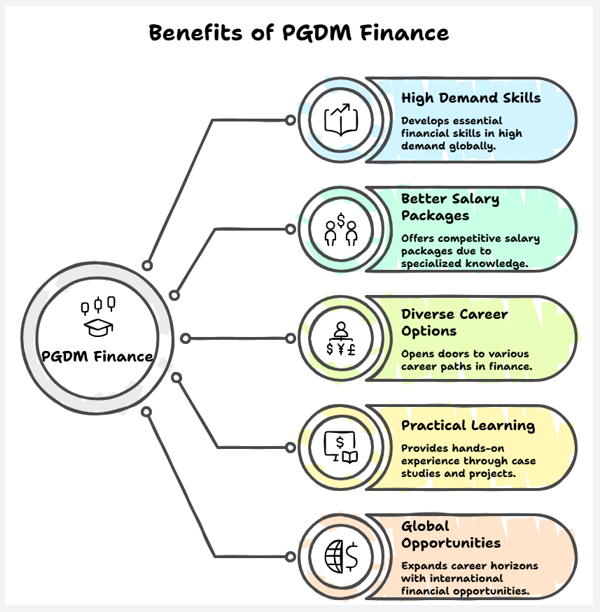
Key Benefits of Studying PGDM Finance
Choosing PGDM Finance offers several advantages:
1. High Demand Skills
Finance professionals are needed in every industry—from startups to multinational companies.
2. Better Salary Packages
Finance roles like analysts and managers often offer attractive pay.
3. Diverse Career Options
You can work in banking, investment firms, corporate finance, fintech, and more.
4. Practical Learning
Most programs include case studies, projects, and real-world scenarios.
5. Global Opportunities
Finance skills are transferable across countries and industries.
Top Finance Skills You’ll Learn in PGDM Finance
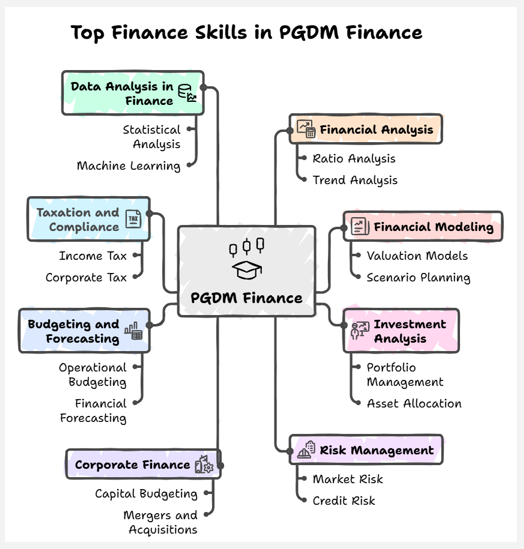
Let’s get to the most important part—the skills you’ll actually gain.
1. Financial Analysis
This is the foundation of all finance roles.
You’ll learn how to:
- Read financial statements
- Analyze company performance
- Identify strengths and weaknesses
Example:
If a company’s profit is increasing but cash flow is low, financial analysis helps you understand why.
2. Financial Modeling
One of the most in-demand skills today.
In a financial modeling course, you’ll learn to:
- Build models in Excel
- Forecast future performance
- Evaluate business decisions
Use Case:
Predicting how a new product launch will impact company revenue.
3. Investment Analysis
This skill helps you decide where to invest money.
You’ll learn:
- Stock market basics
- Risk vs return analysis
- Portfolio management
Example:
Choosing between investing in stocks, mutual funds, or bonds.
4. Risk Management
Every financial decision involves risk. This skill helps you manage it.
You’ll understand:
- Types of financial risks
- Risk assessment techniques
- Risk mitigation strategies
Real-world example:
Banks use risk management to decide whether to approve loans.
5. Corporate Finance
This focuses on managing a company’s finances.
You’ll learn:
- Capital budgeting
- Cost management
- Funding decisions
Example:
Deciding whether a company should take a loan or raise funds through investors.
6. Budgeting and Forecasting
Planning future finances is crucial.
You’ll learn:
- Creating budgets
- Forecasting revenues and expenses
- Managing financial goals
Use Case:
Helping a company plan its annual expenses and profits.
7. Taxation and Compliance
Understanding tax laws is essential for finance professionals.
You’ll learn:
- Basic tax concepts
- Corporate taxation
- Legal compliance
Example:
Helping businesses reduce tax liability legally.
8. Data Analysis in Finance
Finance is becoming more data-driven.
You’ll learn:
- Excel and financial tools
- Data interpretation
- Basic analytics
This skill is especially useful in fintech and analytics roles.
Step-by-Step: How PGDM Finance Builds These Skills
Here’s how you typically learn these skills during the program:
Step 1: Foundation Learning
- Basics of finance and accounting
- Understanding financial concepts
Step 2: Core Subjects
- Financial management
- Investment analysis
- Corporate finance
Step 3: Practical Training
- Case studies
- Live projects
- Internships
Step 4: Specialization
- Advanced topics like financial modeling
- Electives based on career goals
Step 5: Industry Exposure
- Guest lectures
- Workshops
- Real-world problem solving
Latest Trends in Finance Skills
The finance industry is evolving fast. Here are some trends shaping the future:
- Rise of FinTech: Digital payments and blockchain are growing rapidly
- Data-Driven Finance: Companies rely heavily on analytics
- Automation: AI is automating routine financial tasks
- ESG Investing: Focus on sustainable and ethical investments
Insight:
Professionals who combine finance skills with technology have a huge advantage today.
Real-World Career Opportunities
After completing PGDM Finance, you can explore roles like:
- Financial Analyst
- Investment Banker
- Risk Analyst
- Corporate Finance Manager
- Wealth Manager
Example:
A financial analyst helps companies make better investment decisions using data and forecasts.
FAQs
1. What is PGDM Finance?
It is a postgraduate diploma program that focuses on finance skills like investment, analysis, and financial management.
2. Is PGDM Finance good for beginners?
Yes, it starts with basics and gradually builds advanced knowledge.
3. What skills are most important in finance?
Financial analysis, financial modeling, and risk management are key skills.
4. Does PGDM Finance include practical training?
Yes, most programs include case studies, internships, and real-world projects.
5. What is the salary after PGDM Finance?
It varies, but freshers can expect competitive entry-level packages with growth potential.
6. Is financial modeling necessary?
Yes, it is one of the most in-demand finance skills today.
7. Can I switch careers after PGDM Finance?
Yes, many students successfully transition into finance from other fields.
Conclusion
A PGDM Finance program is more than just a degree—it’s a career-building journey. It equips you with practical finance skills that are highly valued in today’s job market.
If you’re serious about building a strong career in finance, focus on mastering key areas like financial modeling, analysis, and risk management.
👉 Start learning basic finance concepts and Excel skills today—even before joining a program. This will give you a strong head start.