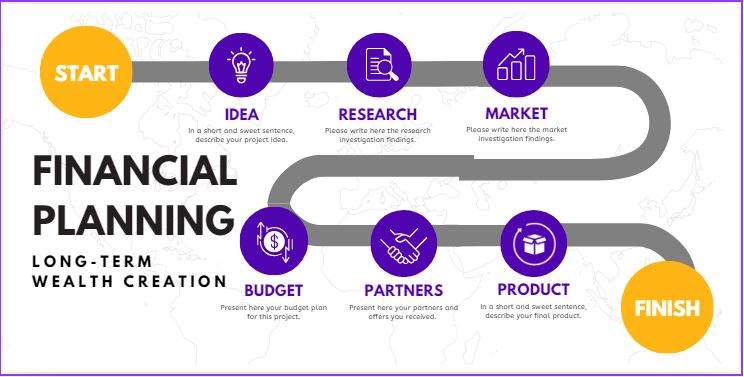
What is the meaning of financial planning?
Financial planning is the art of managing your money to meet your financial goals. It involves budgeting, saving, investing and planning for risks, all while keeping inflation and taxes in mind. In short, it is creating a personalised roadmap for your financial journey. With a solid plan, you gain control over your resources, reduce uncertainties and make informed choices that bring long-term stability and peace of mind.
Financial planning is the backbone of long-term wealth creation. It provides a structured approach to managing finances and helps individuals achieve their financial goals. Whether you’re looking to retire comfortably, invest in properties, or simply grow your savings, having a sound financial plan is crucial. It helps you stay focused, avoid financial pitfalls, and capitalize on opportunities.
Here’s why financial planning is important for wealth creation and how you can achieve it through smart education choices like a PG Diploma in Finance.
1. Understanding Financial Planning
Financial planning involves managing your income, expenses, savings, and investments to achieve your long-term goals. It’s not just about saving money; it’s about making your money work for you. Key components of financial planning include budgeting, investing, tax planning, risk management, and retirement planning.
Having a well-structured financial plan enables you to:
Manage Cash Flow: Helps you track income and expenses, ensuring you live within your means.
Build Wealth: Guides you to invest in assets that grow in value over time.
Mitigate Risks: Protects your wealth from risks through insurance and strategic investments.
Plan for Retirement: Ensures you have enough savings for a comfortable retirement.
2. Long-Term Wealth Creation through Financial Planning
Wealth creation is not an overnight process—it requires patience, strategy, and consistent effort. Financial planning helps in:
Setting Achievable Goals: A financial plan outlines your short-term and long-term goals, such as buying a house, starting a business, or retirement.
Investment Strategies: Financial planning encourages you to invest in growth assets like stocks, bonds, mutual funds, and real estate, which generate returns over time.
Tax Efficiency: Proper tax planning can minimize your tax liabilities, leaving more money for investments.
Discipline: Financial planning instills discipline in saving and investing, which is essential for long-term wealth accumulation.
3. Education’s Role in Financial Planning
The key to effective financial planning lies in understanding financial concepts and the ability to make informed decisions. A Post Graduate Diploma in Finance is an excellent way to gain this knowledge, especially if you pursue a program designed for working professionals, such as distance learning courses in Mumbai.
4. Distance Learning and Finance Courses in Mumbai
For those looking to improve their financial management skills, enrolling in a post graduate diploma in finance from a reputed institution like MIT School of Distance Education (MITSDE) is an excellent choice. MITSDE offers a variety of distance education courses tailored to finance professionals and aspiring finance managers.
The flexibility of online education allows you to pursue these courses without disrupting your career or personal life. Through a pg diploma in finance or a pg diploma in banking, students gain comprehensive knowledge of financial management, investment strategies, and market analysis, all of which are essential for long-term wealth creation.
5. How MITSDE’s PGDM in Finance Supports Financial Planning
MITSDE’s Post Graduate Diploma in Financial Management equips you with the skills to excel in the field of finance. The curriculum is designed to cover all aspects of finance , including corporate finance, financial markets, risk management, and investment strategies. This knowledge is critical for individuals looking to build and manage wealth effectively.
The program offers:
Comprehensive Curriculum: Covers core financial subjects like investment analysis, financial planning, and risk management.
Flexible Learning: MITSDE’s distance education platform allows you to study from anywhere in the world at your own pace.
Industry-Relevant Skills: The course material is regularly updated to meet current industry standards, ensuring that students acquire practical, real-world knowledge.
6. How to Enroll in MITSDE’s Finance Management Programs
Enrolling in MITSDE’s post-graduate diploma courses in finance is simple:
Visit the MITSDE website.
Explore the various finance-related programs such as the pgdm in finance, finance post-graduate diploma, and postgraduate diploma financial management.
- Choose the course that best suits your career goals.
- Submit the application form online.
- Once enrolled, you can start learning immediately through their online education platform.
MIT School of Distance Education provides the perfect balance between theoretical knowledge and practical skills, making it easier for you to implement your financial plan and achieve your wealth creation goals.
Conclusion
Financial planning is crucial for anyone aiming to build long-term wealth. By creating a solid plan and equipping yourself with the right knowledge through programs like MITSDE’s Post Graduate Diploma in Finance, you can manage your money more effectively, invest wisely, and secure a financially sound future. With the flexibility of distance learning courses in Mumbai, you can acquire