As a kid, have you ever thought of what an ideal teacher would look, talk or think like?
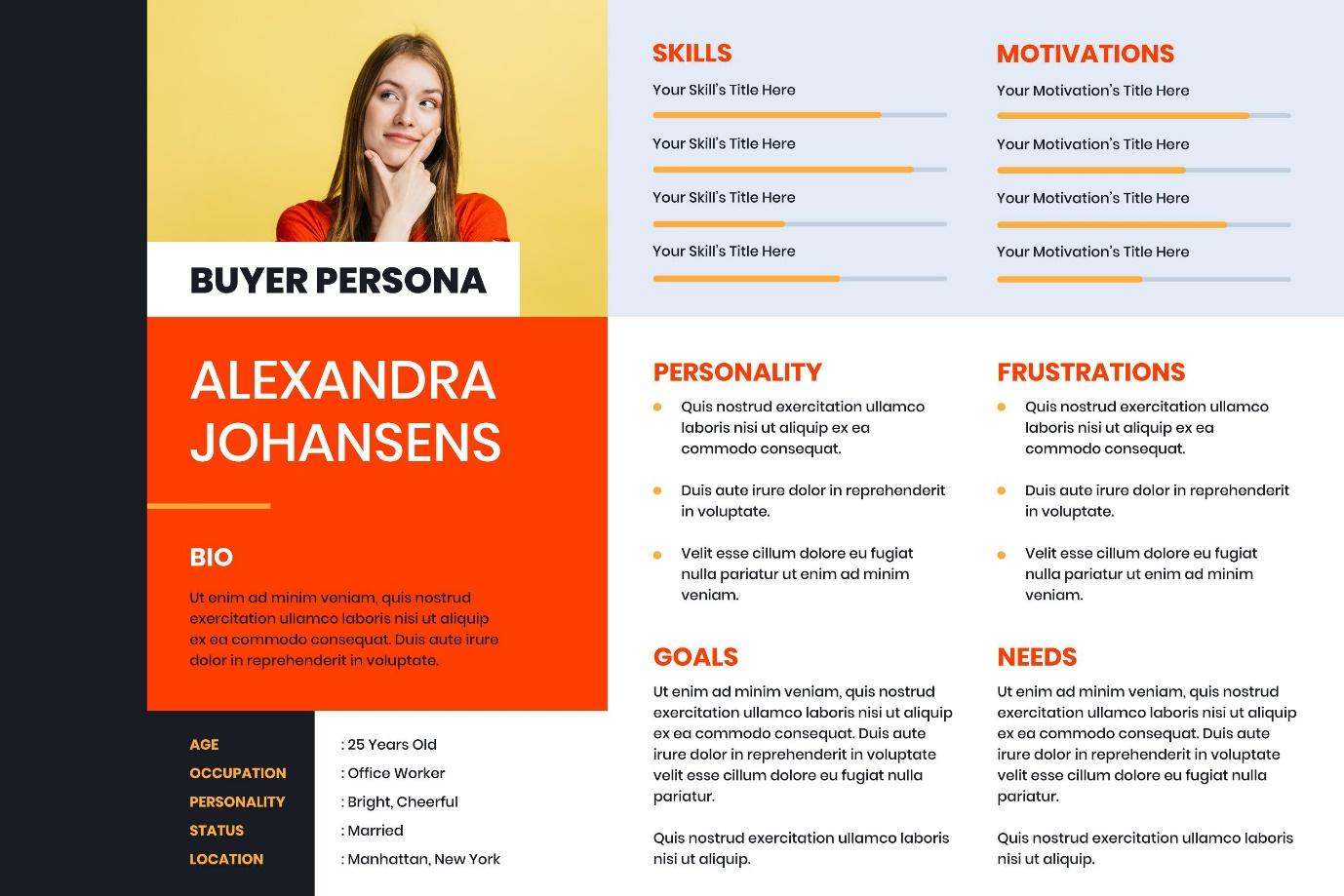
A buyer persona is similar to that. It is the description of what an ideal customer of your company would be like. It guides the marketing team with targeting, communication, and promotional strategies.
It is the starting point of any marketing journey. A marketing strategy revolves around this buyer persona.
What is a Buyer Persona?
Kotler & Keller (2016) define Personas in the marketing domain as “detailed profiles of one, or perhaps a few, hypothetical target consumers, imagined in terms of demographic, psychographic, geographic, or other descriptive attitudinal or behavioural information”.
It is basically a semi-fictitious representation of your ideal customer. It is also known as marketing persona or customer persona. A buyer persona provides detailed information about the demography, geographic location, personality traits, and interests of your potential customer.
Why Should You Define A Buyer Persona?
Customer persona helps the marketing team decide their target market and decide the marketing strategies best suited for that market. For example, if ABC Corp. produces anti-ageing cream for women, then the marketing persona will look like this –
Age – Since the product is an anti-ageing cream, the target age group will be women above 35 years.
Location – Considering your shipping & production capacity, you can make the product available only to Tier-1 cities, hence the target audience will be from Tier-1 cities only.
Gender – Women above 35 years of age
Income – Rs. 40000 – Rs. 1,00,000 per month
Education – Since the target audience is from Tier-1 cities and the buying potential is higher, the education level will be graduate, post-graduate or doctoral level.
Relationship status – Married, Single, Divorced, or Widowed
Occupation – Professionals, In Services, or Homemakers
Social media & usage – Facebook, Instagram, Twitter, YouTube, and LinkedIn. The usage ranges between moderate to low (1-2 hours per day)
Hobbies – They can be engaged in any hobbies such as singing, dancing, gyming, gardening, etc.
This is just a glimpse of what can entail for an actual buyer persona for any company.
Looking at this information, the company can decide the type of messaging, decide the medium of communication, arrive at a price point, develop promotional strategies like offers and discounts, and determine the customer lifecycle.
What Is A Negative Persona?
If buyer personas represent the ideal or intended audience, then negative personas as the ones that the company does not intend to target and hence does not structure its marketing communication around them.
A negative persona is an audience who do not intend to buy, do not identify with the brand, or are not desired by the company, such as ones who question the brand, post negative reviews without purchasing the product, and cancel their orders last minute, or suspect and question the brand.
How To Create The Persona?
A buyer persona is built through careful market research, intensive surveys, brainstorming sessions, and actual data collection.
Here are a few ways in which you can build a buyer persona –
-
- Market research – Conducting a market survey can help you understand the target market. This can be done through sampling, focus groups, interviews, secondary research, or market testing. Conducting market research with an adequate sample size will help you understand the demography, geography, mindset, personality, interests, buying habits, economic status, values, challenges and opportunities.
-
- Use existing clients – The simplest and most cost-effective way to build a person is through existing clients. Based on their feedback, you can redefine the persona to better suit the target market.
-
- Brainstorming – Sitting down with your sales team and taking their feedback or inputs on what the customers think about the product or brand will give you a better understanding of the audience’s psyche and put things in perspective. Based on these insights you can rebuild or redefine your marketing persona.
-
- Analytics – Using analytical tools will help you get real-time data on who visits your website, the duration they spend on your website, social media followers, demography, geographic location, interests, visits/session duration, purchase pattern, and purchase method.
-
- Existing database – Analysing the existing data will help you uncover trends, patterns, and behavioural traits.
Understanding the buyer persona is important for all aspects of business like product development, sales and marketing.
Hence as a marketing professional carefully deciding your marketing person is the most important part of the job. This requires one to possess strong communication, analytical skills, and creative thinking ability.
MIT School of Distance Education (MITSDE) is one such institute that understands the current skills gap in the market and strives hard to reduce it. For this purpose, MITSDE brings to you PGDM (Executive) in Strategic Marketing Management for those possessing 2+ years of experience. This course in covers the basics & the latest concepts in marketing gives hands-on training on the latest tools and teaches you to create a brand, analyze market trends, and design marketing campaigns.