
If you want specialized skills in banking, financial services, and fintech, a PGDM in Banking is often the better choice.
If you prefer broader finance knowledge with corporate finance and investment roles, an MBA in Finance may be more suitable.
Both programs offer strong career opportunities, but the right choice depends on your career goals, industry preference, and learning format.
What Is the Difference Between PGDM Banking and MBA Finance?
When finance aspirants explore postgraduate programs, they often compare PGDM banking vs MBA finance to understand which course offers better career opportunities.
Both programs focus on financial knowledge, but their approach, curriculum, and industry alignment differ.
- Industry-oriented program focused on banking operations and financial services
- Covers retail banking, risk management, financial regulations, and fintech
- Designed for careers in banks, NBFCs, insurance, and financial institutions
- University degree focusing on corporate finance, investment analysis, and financial management
- Suitable for roles in corporations, investment firms, and financial consulting
Simply put, PGDM Banking is specialized, while MBA Finance is broader.
Which Program Has a More Industry-Relevant Curriculum?
One of the most important factors when comparing PGDM banking vs MBA finance is the curriculum structure.
PGDM Banking Curriculum
A best banking program typically includes subjects like:
- Banking operations
- Financial markets and instruments
- Risk and compliance management
- Fintech and digital banking
- Credit management
- Retail banking services
The curriculum focuses heavily on practical banking skills and financial services expertise.
MBA Finance Curriculum
An MBA Finance program usually includes:
- Corporate finance
- Financial modeling
- Investment management
- Financial statement analysis
- International finance
- Portfolio management
MBA Finance provides strong analytical and strategic finance knowledge, making it suitable for corporate roles.
Which Program Offers Better Career Opportunities?
Career outcomes are one of the biggest reasons students search for PGDM banking vs MBA finance.
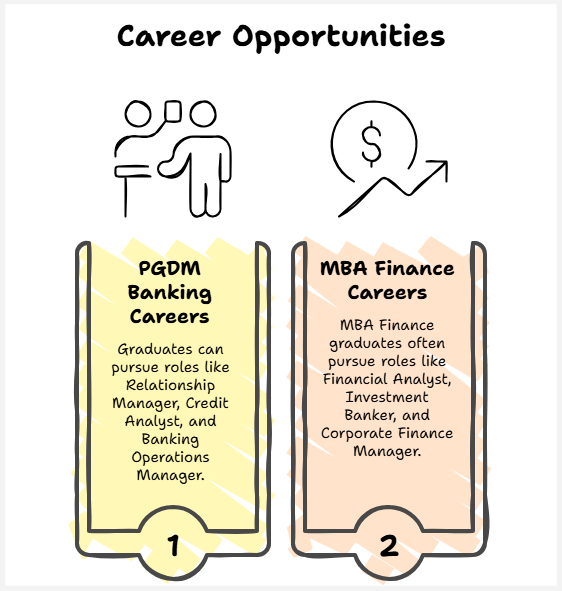
Careers After PGDM Banking
Graduates from a best banking program can pursue roles such as:
- Relationship Manager
- Credit Analyst
- Banking Operations Manager
- Risk Analyst
- Financial Services Consultant
- Loan Officer
These roles are mainly available in:
- Banks
- NBFCs
- Insurance companies
- Financial service firms
- Fintech companies
Careers After MBA Finance
MBA Finance graduates often pursue roles such as:
- Financial Analyst
- Investment Banker
- Corporate Finance Manager
- Portfolio Manager
- Equity Research Analyst
- Financial Consultant
These opportunities are common in:
- Corporates
- Investment firms
- Consulting companies
- Financial advisory firms
Which Program Has Better ROI?
Return on investment is another major factor while comparing PGDM banking vs MBA finance.
PGDM Banking ROI
PGDM programs often provide:
- Industry-focused training
- Shorter program duration
- Practical skill development
- Direct alignment with banking careers
Because of these factors, students often find faster employability in the banking sector.
MBA Finance ROI
MBA Finance offers:
- Broader career opportunities
- Corporate leadership potential
- Long-term salary growth
However, ROI depends heavily on the business school reputation and placements.
Which Program Is Better for the Banking Sector?
If your goal is to build a career specifically in banking, then PGDM Banking is often considered the best banking program.
This is because the program focuses on:
- Banking regulations
- Lending operations
- Credit analysis
- Financial compliance
- Digital banking systems
MBA Finance, on the other hand, prepares students for corporate finance and investment roles, which may not focus deeply on banking operations.
Which Course Is Better for Working Professionals?
Many working professionals also compare PGDM banking vs MBA finance when planning career advancement.
A PGDM Banking program is often more flexible because many institutes offer:
- Online learning options
- Weekend classes
- Industry-oriented projects
MBA programs may require full-time study, depending on the university structure.
For professionals already working in the financial sector, PGDM Banking can provide targeted skill upgrades.
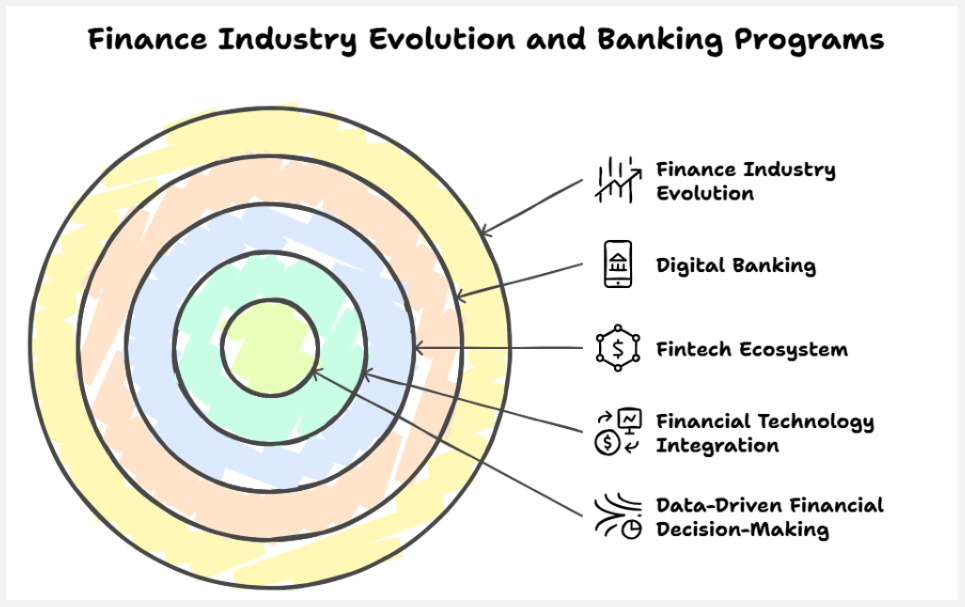
Which Program Has Better Industry Relevance in 2026?
The finance industry is evolving rapidly with:
- Digital banking
- Fintech innovation
- AI-driven financial analytics
- Blockchain-based financial systems
Because of this shift, many modern best banking programs include topics such as:
- Digital banking
- Fintech ecosystem
- Financial technology integration
- Data-driven financial decision-making
These subjects make PGDM Banking highly relevant for the modern financial ecosystem.
MBA Finance remains valuable for corporate finance leadership roles, but may require additional specialization for fintech or banking sectors.
Why Choose MITSDE for a Banking Program?
If you are searching for the best banking program, choosing the right institute is equally important.
MITSDE offers programs designed to match modern banking and financial industry requirements.
Industry-Oriented Curriculum
The program focuses on practical financial skills, banking operations, and financial services expertise.
Flexible Learning
Students can pursue the program through online and distance learning formats, making it suitable for working professionals.
Career-Focused Training
The curriculum emphasizes real-world financial applications, industry projects, and practical case studies.
Industry-Relevant Skills
Students learn topics aligned with modern financial systems, banking technology, and financial analytics.
These advantages make MITSDE a strong choice for students exploring PGDM banking vs MBA finance options.
Frequently Asked Questions (FAQs)
1. What is the main difference between PGDM Banking and MBA Finance?
The main difference is specialization. PGDM Banking focuses on banking and financial services, while MBA Finance covers broader corporate finance and investment topics.
2. Which program is better for banking careers?
For banking sector roles such as credit analyst, loan officer, or relationship manager, PGDM Banking is often considered the best banking program.
3. Is PGDM Banking equivalent to MBA Finance?
Both are postgraduate management programs in finance-related fields, but PGDM Banking is more specialized, while MBA Finance is broader.
4. Which program has better job opportunities?
Both programs offer strong job opportunities. PGDM Banking leads to banking and financial services roles, while MBA Finance leads to corporate finance and investment roles.
5. Can working professionals pursue PGDM Banking?
Yes. Many institutes offer flexible online or distance PGDM Banking programs, making them suitable for working professionals.
6. Which course has better industry relevance today?
With the growth of digital banking and fintech, specialized banking programs are becoming increasingly relevant for finance careers.
Conclusion
Choosing between PGDM banking vs MBA finance depends on your career goals, industry preference, and specialization interests.
If you want a career in banks, financial services, or fintech, a PGDM Banking program can provide focused skills and industry exposure.
If you prefer corporate finance, investment banking, or financial consulting, an MBA Finance degree may be more suitable.
The key is selecting a program that aligns with your long-term career vision and industry demand. With the right program and institute, you can build a successful career in the dynamic world of finance.