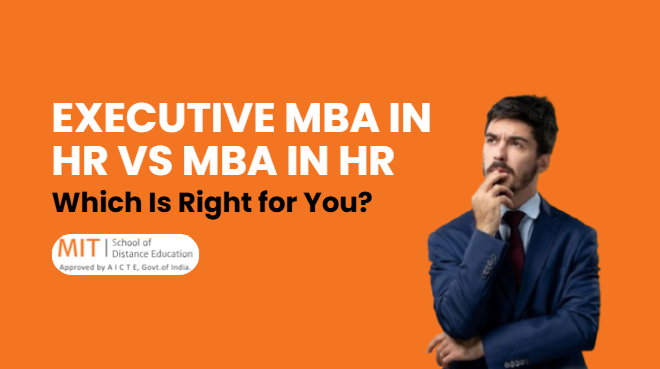
Choosing between an Executive MBA in HR and a regular MBA in HR can shape your career path, salary growth, and leadership opportunities. While both programs focus on human resource management, they are designed for different career stages. If you are a working professional aiming for leadership roles, an executive mba hr may be the better fit. If you are starting your career or have limited experience, a traditional MBA in HR could be ideal.
What Is an Executive MBA in HR?
An Executive MBA in HR is a specialized management program designed for experienced professionals who want to grow into senior HR and leadership positions without leaving their jobs.
This program usually offers:
- Flexible weekend or online classes
- Industry-oriented curriculum
- Leadership and strategic HR training
- Networking opportunities with experienced professionals
An executive mba hr is ideal for:
- HR professionals with 3–10 years of experience
- Team leaders or managers
- Working professionals seeking promotions
- Entrepreneurs managing teams
Key Focus Areas in Executive MBA HR
- Strategic Human Resource Management
- Talent Acquisition & Retention
- Organizational Behavior
- HR Analytics
- Employee Engagement
- Leadership & Change Management
- Labor Laws & Compliance
What Is an MBA in HR?
An MBA in HR is a full-time or part-time postgraduate degree focused on building foundational business and HR management skills.
It is generally suitable for:
- Fresh graduates
- Early-career professionals
- Students switching careers into HR
- Individuals looking for campus placements
The program teaches both management fundamentals and HR specialization subjects.
Key Subjects in MBA in HR
- Recruitment & Selection
- Training & Development
- Compensation Management
- Performance Management
- Business Communication
- Marketing & Finance Basics
- Organizational Psychology
Executive MBA HR vs MBA in HR: Major Differences
Feature | Executive MBA in HR | MBA in HR |
Target Audience | Working professionals | Freshers & early-career students |
Work Experience | Usually required | Often optional |
Learning Format | Weekend/online/flexible | Mostly full-time |
Career Goal | Leadership & senior roles | Entry to mid-level roles |
Networking | Experienced professionals | Students & recruiters |
Salary Growth | Faster for experienced candidates | Gradual career growth |
Duration | 1–2 years | 2 years |
Practical Exposure | Industry-focused | Academic + internships |
Why Is HR Management Important Today?
Human Resources is no longer limited to hiring employees. Modern HR professionals shape company culture, improve productivity, and support business growth.
Companies today focus heavily on:
- Employee wellbeing
- Remote workforce management
- Diversity and inclusion
- HR technology and automation
- Talent retention strategies
As businesses grow, skilled HR leaders are becoming more valuable than ever.
According to recent industry reports, HR analytics, AI-based hiring, and employee experience management are among the fastest-growing HR trends globally.
Benefits of an Executive MBA in HR
1. Career Growth Without Leaving Your Job
One major advantage of an executive mba hr is flexibility. You can continue earning while studying.
This makes it easier for professionals to:
- Gain promotions
- Switch to leadership roles
- Improve salary packages
- Build managerial confidence
2. Strong Industry Exposure
Executive programs focus more on practical business challenges rather than only theory.
You learn through:
- Real-world case studies
- Live projects
- Peer learning
- Leadership workshops
3. Better Networking Opportunities
Your classmates are usually experienced professionals from different industries.
This creates valuable connections that can help in:
- Job referrals
- Industry collaborations
- Leadership learning
- Career guidance
4. Higher Salary Potential
Professionals with an executive mba hr often move into roles like:
- HR Manager
- Talent Acquisition Head
- HR Business Partner
- Learning & Development Manager
- CHRO (Chief Human Resources Officer)
These roles generally offer better salary packages compared to entry-level HR jobs.
Benefits of an MBA in HR
1. Strong Foundation for Beginners
An MBA in HR teaches both business management and HR basics, making it ideal for newcomers.
2. Campus Placement Opportunities
Many universities offer:
- Placement drives
- Internship opportunities
- Corporate tie-ups
This helps fresh graduates enter the HR field quickly.
3. Affordable for Early Career Professionals
Compared to executive programs, traditional MBA courses may be more budget-friendly for students.
Executive MBA HR vs MBA in HR: Which One Should You Choose?
Choose Executive MBA in HR If:
- You already have work experience
- You want leadership roles
- You cannot leave your job
- You want flexible learning
- You aim for faster career growth
Example:
A working HR executive with 5 years of experience may pursue an executive mba hr to become an HR Business Partner or HR Manager.
Choose MBA in HR If:
- You are a fresher
- You want campus placements
- You need strong management fundamentals
- You are entering the HR industry for the first time
Example:
A recent graduate interested in recruitment or talent management may start with a traditional MBA in HR.
Online MBA in HR Management: Is It Worth It?
The demand for online mba in hr management programs has increased rapidly after the growth of remote learning and hybrid workplaces.
Benefits of Online MBA HR Programs
- Flexible schedule
- Lower travel costs
- Learn from anywhere
- Ideal for working professionals
- Access to digital learning resources
However, students should always choose accredited institutions with strong industry recognition.
Latest HR Trends You Should Know
1. AI in Recruitment
Companies now use AI tools to:
- Screen resumes
- Conduct initial interviews
- Improve hiring speed
HR professionals must understand HR technology tools.
2. HR Analytics
Data-driven HR decisions are becoming standard.
Companies analyze:
- Employee performance
- Retention rates
- Productivity metrics
Professionals with HR analytics skills are highly in demand.
3. Remote Workforce Management
Managing hybrid teams has become a critical HR skill.
Modern HR leaders must understand:
- Employee engagement tools
- Virtual communication
- Remote performance tracking
Step-by-Step Guide to Choosing the Right HR Program
1. Evaluate Your Experience Level
Ask yourself:
- Are you a fresher?
- Do you already work in HR?
2. Define Your Career Goals
Choose based on whether you want:
- Entry-level HR roles
- Leadership positions
- Salary growth
- Career switch opportunities
3. Decide Your Learning Preference
Consider:
- Full-time classroom learning
- Weekend executive classes
- Online MBA in HR management
4. Compare ROI
Look at:
- Course fees
- Placement opportunities
- Salary growth potential
- Networking benefits
Common Career Roles After HR Programs
After MBA in HR
- HR Executive
- Recruiter
- Payroll Executive
- Training Coordinator
After Executive MBA HR
- HR Manager
- HR Business Partner
- Talent Strategy Lead
- Organizational Development Manager
FAQs
1. Is executive mba hr better than MBA in HR?
It depends on your experience level. Executive MBA HR is better for experienced professionals, while MBA in HR suits freshers and early-career candidates.
2. Can I do an executive mba hr without HR experience?
Some institutes allow professionals from other industries, but most prefer prior work experience.
3. Is online mba in hr management valuable?
Yes, especially for working professionals seeking flexibility and career growth.
4. What is the average salary after executive mba hr?
Salaries vary by experience and company, but professionals often receive higher managerial packages compared to entry-level HR roles.
5. Which has better placements: MBA in HR or Executive MBA HR?
Traditional MBA programs often provide campus placements, while Executive MBA programs focus more on career advancement for working professionals.
6. How long does an executive mba hr take?
Most programs take 1–2 years, depending on the institute and learning mode.
7. Can I switch careers with an MBA in HR?
Yes, many students use MBA in HR programs to move into recruitment, talent management, or employee relations roles.
Conclusion
Both programs offer excellent career opportunities, but the right choice depends on your professional stage and long-term goals. If you are an experienced professional looking for leadership growth, flexibility, and higher salary potential, an executive mba hr is likely the better option. If you are starting your journey in human resources, a traditional MBA in HR can build the foundation you need.
Before choosing any program, compare curriculum quality, industry exposure, flexibility, placement support, and long-term ROI. The right HR qualification can open doors to leadership roles in today’s rapidly evolving workplace.