An MBA in Logistics and Supply Chain Management prepares graduates for careers such as Supply Chain Manager, Logistics Manager, Procurement Manager, Operations Manager, Warehouse Manager, and Supply Chain Analyst. With industries like e-commerce, manufacturing, retail, and healthcare expanding rapidly, this specialisation offers excellent career growth, competitive salaries, and global job opportunities.
The success of every business depends on delivering products to customers quickly, efficiently, and cost-effectively. From online shopping and manufacturing to international trade, logistics and supply chain management play a vital role in business operations.
As companies invest in smarter supply chains and digital technologies, professionals with an MBA in Logistics and Supply Chain Management are in high demand. Whether you are a fresh graduate or a working professional, this MBA can help you build a rewarding career in one of the fastest-growing industries.
What is an MBA in Logistics and Supply Chain Management?
An MBA in Logistics and Supply Chain Management is a postgraduate management programme that teaches students how goods, services, and information move from suppliers to customers.
The course focuses on managing every stage of the supply chain, including:
- Procurement
- Inventory Management
- Warehousing
- Transportation
- Distribution
- Operations Management
- Supply Chain Analytics
- International Logistics
- Risk Management
Students also learn leadership, strategic planning, financial management, and business decision-making, making them ready for managerial roles.
Today, many working professionals prefer online MBA in logistics and supply chain management programmes because they offer flexibility without interrupting their careers. Similarly, MBA in logistics and supply chain management distance education options have become increasingly popular among learners looking for affordable and convenient education.
What Are The Benefits of Pursuing an MBA in Logistics and Supply Chain Management
Choosing this specialisation offers several long-term advantages.
High Industry Demand
Almost every industry requires logistics professionals, creating consistent job opportunities.
Excellent Salary Growth
Experienced professionals often move into senior leadership positions with attractive compensation packages.
Diverse Career Options
You are not limited to one sector. Opportunities exist across:
Global Career Opportunities
Supply chain knowledge is valuable worldwide, making international careers possible.
Leadership Skills
The programme develops managerial and strategic decision-making abilities that prepare graduates for leadership roles.
Career Opportunities After an MBA in Logistics and Supply Chain Management
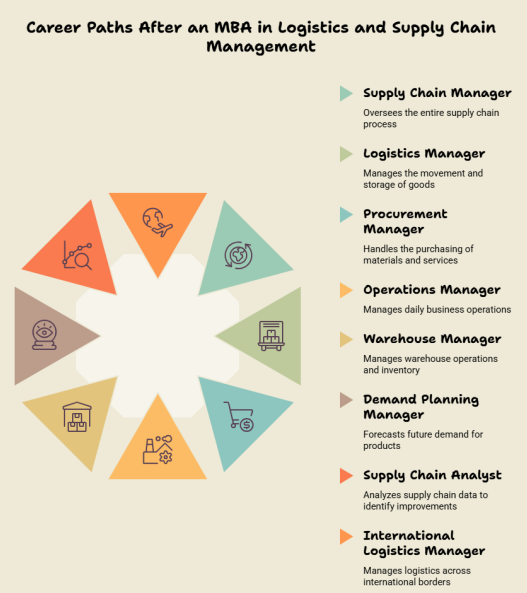
One of the biggest advantages of this degree is the wide variety of career paths available.
1. Supply Chain Manager
Supply Chain Managers oversee the complete movement of products from suppliers to customers.
Their responsibilities include:
- Planning inventory
- Managing suppliers
- Reducing operational costs
- Improving efficiency
- Coordinating logistics teams
This is one of the most sought-after roles after completing an MBA.
2. Logistics Manager
A Logistics Manager ensures products are transported safely and delivered on time.
Key responsibilities include:
- Route planning
- Transportation management
- Warehouse coordination
- Vendor management
- Delivery optimisation
3. Procurement Manager
Procurement Managers purchase raw materials and negotiate with suppliers.
They focus on:
- Vendor selection
- Contract negotiations
- Cost reduction
- Quality assurance
- Supplier relationship management
4. Operations Manager
Operations Managers supervise daily business operations while ensuring productivity and efficiency.
They often work closely with logistics and warehouse teams to improve operational performance.
5. Warehouse Manager
Warehouse Managers are responsible for:
- Inventory control
- Warehouse safety
- Order fulfilment
- Storage optimisation
- Staff management
Automation has made this role more technology-driven than ever before.
6. Demand Planning Manager
Demand planners forecast customer demand using market trends and historical sales data.
Their work helps companies avoid:
- Overstocking
- Inventory shortages
- Production delays
7. Supply Chain Analyst
Supply Chain Analysts use data to improve logistics performance.
They analyse:
- Inventory levels
- Transportation costs
- Supplier performance
- Customer demand
- Operational efficiency
Professionals with analytics skills are increasingly valuable in modern supply chains.
8. International Logistics Manager
Businesses involved in exports and imports require professionals who understand:
- Customs regulations
- Global shipping
- International trade
- Freight forwarding
- Cross-border logistics
This role offers opportunities to work with multinational organisations.
Latest Trends in Logistics and Supply Chain Management
The logistics industry is evolving rapidly with technology.
Some major trends include:
Artificial Intelligence (AI)
AI helps forecast demand, optimise routes, and improve inventory management.
Warehouse Automation
Robotics and automated storage systems are improving warehouse efficiency.
Data Analytics
Businesses rely on real-time data to make faster supply chain decisions.
Sustainable Logistics
Companies are adopting eco-friendly transportation and packaging to reduce environmental impact.
Digital Supply Chains
Cloud-based systems provide real-time visibility across the supply chain, enabling quicker responses to disruptions.
Professionals who understand these technologies will have a competitive advantage in the coming years.
Who Should Choose This MBA?
This programme is suitable for:
- Fresh graduates
- Engineers
- Commerce graduates
- Working professionals
- Manufacturing professionals
- Retail executives
- Entrepreneurs
- Operations professionals
Those who cannot attend regular classes can choose mba in logistics and supply chain management distance education or an online mba in logistics and supply chain management for greater flexibility.
Skills Employers Look For
Recruiters prefer candidates with a combination of technical and managerial skills.
Important skills include:
- Analytical thinking
- Inventory management
- Procurement knowledge
- Data interpretation
- Leadership
- Communication
- Project management
- Negotiation
- Strategic planning
- Technology adoption
Conclusion
An MBA in Logistics and Supply Chain Management is an excellent choice for anyone seeking a future-ready management career. As businesses continue to modernise their supply chains, the demand for skilled logistics professionals will continue to grow. Whether you choose a regular programme, online MBA in logistics and supply chain management, mba in logistics and supply chain management distance education, or an executive mba logistics and supply chain, developing practical skills and staying updated with industry trends will help you build a successful and rewarding career.
Frequently asked Questions
-
1. Is an MBA in Logistics and Supply Chain Management a good career choice?
Yes. It offers excellent career opportunities across industries such as manufacturing, e-commerce, retail, healthcare, aviation, and international trade.
-
2. What is the average salary after an MBA in Logistics and Supply Chain Management?
Salaries vary depending on experience, industry, and location. Entry-level professionals generally earn competitive packages, while experienced managers can achieve significantly higher salaries as they progress into leadership roles.
-
3. Can I pursue an online MBA in Logistics and Supply Chain Management while working?
Yes. An online mba in logistics and supply chain management is designed for working professionals who want to upgrade their qualifications without leaving their jobs.
-
4. Is distance education valid for logistics management?
Yes. Many recognised institutions offer mba in logistics and supply chain management distance education programmes that provide flexibility while maintaining academic standards. Always choose an accredited institution.
-
5. What industries hire logistics and supply chain professionals?
Professionals are recruited by e-commerce companies, manufacturing firms, retail chains, pharmaceuticals, FMCG companies, logistics providers, shipping companies, consulting firms, and government organisations.