In today’s competitive business environment, efficient material management plays a critical role in ensuring seamless supply chain operations. Companies rely on advanced technologies like SAP Material Management (SAP MM) to streamline procurement, inventory, logistics, and warehouse functions. For professionals aiming to build a career in this domain, mastering SAP MM is a gateway to success. This guide explores the essentials of SAP MM, its career scope, and how courses like Material Management can boost your professional journey.
What is SAP Material Management in Business Operations?
SAP Material Management (SAP MM) is one of the core modules in SAP ERP systems that manages procurement and inventory functions. It ensures that materials and goods are available in the right quantity, at the right time, and at the right cost. Businesses use SAP MM to manage vendor relationships, purchase orders, stock levels, and invoices.
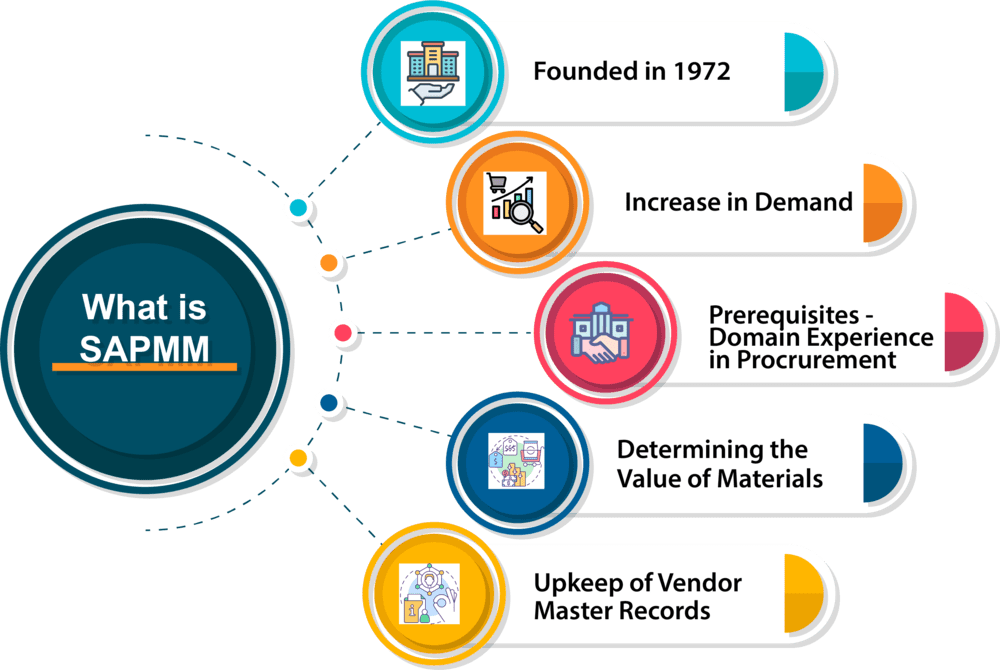
In essence, SAP MM acts as the backbone of business operations where raw materials, finished goods, and services need to be tracked, procured, and managed efficiently.
How Does SAP MM Improve Supply Chain Efficiency?
SAP MM directly enhances supply chain efficiency by:
- Reducing manual processes and paperwork.
- Offering real-time tracking of goods and stock availability.
- Integrating procurement, warehouse, and logistics activities seamlessly.
- Reducing wastage and overstocking.
- Helping businesses maintain better vendor management.
By automating core processes, SAP MM helps organizations achieve cost-effectiveness and ensure uninterrupted production cycles.
What Are the Key Modules of SAP Material Management?
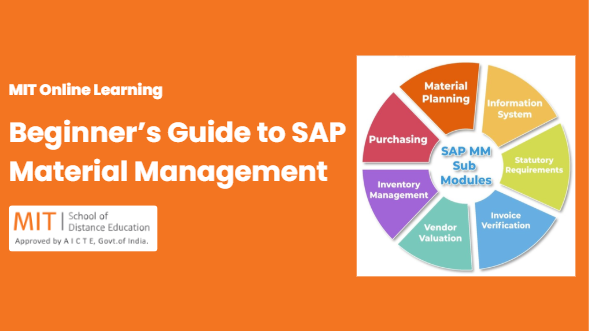
SAP MM consists of several sub-modules that handle different aspects of material management:
- Purchasing – Manages purchase requisitions, purchase orders, and vendor evaluations.
- Inventory Management – Tracks stock movements, stock transfers, and reservations.
- Material Requirement Planning (MRP) – Helps forecast and plan material requirements.
- Invoice Verification – Ensures accuracy between purchase orders, goods receipts, and vendor invoices.
- Valuation and Account Determination – Manages material valuation and financial postings.
Together, these modules provide a holistic system that integrates procurement, warehouse, and financial operations.
Which Are the Best Material Management Courses for SAP MM?
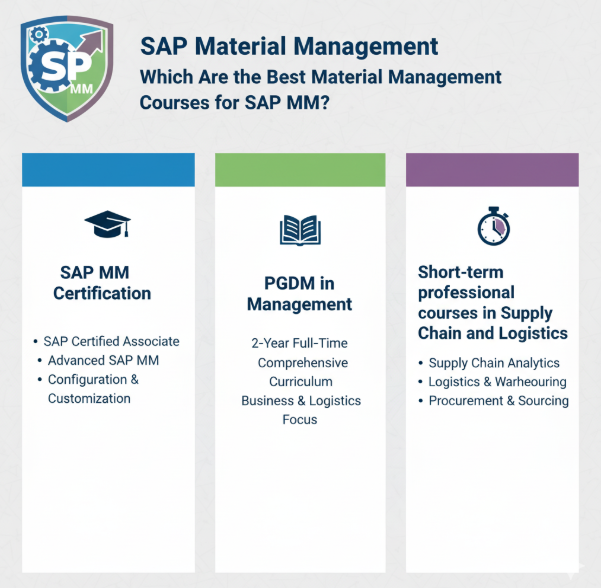
For professionals and students looking to specialize in SAP MM, pursuing the best material management courses can give them a competitive edge. Some popular training programs include:
- SAP MM Certification Courses offered by global SAP-authorized institutes.
- PGDM in Material Management, which provides both managerial and technical knowledge.
- Short-term professional courses in Supply Chain and Logistics with SAP integration.
Selecting the right course depends on career goals—whether you’re looking for technical SAP expertise or managerial roles in material management.
Is PGDM Material Useful for SAP MM Career Growth?
Absolutely! A PGDM in Material Management is highly beneficial for those pursuing careers in SAP MM. While SAP MM equips professionals with technical ERP skills, a PGDM provides them with managerial knowledge in procurement, logistics, operations, and inventory control.
The combination of a PGDM Material program and SAP MM training prepares individuals for higher-level roles like:
- Supply Chain Manager
- Procurement Specialist
- Warehouse Operations Head
- SAP MM Consultant
This blend of technical and managerial expertise makes professionals more adaptable to the evolving needs of industries.
What Are the Benefits of Learning SAP MM for Professionals?
For working professionals, learning SAP MM provides multiple benefits:
- High Demand – SAP MM consultants and professionals are in demand across industries like manufacturing, logistics, and retail.
- Career Growth – Specialized SAP MM skills lead to faster promotions and better job roles.
- Global Recognition – SAP-certified professionals have international career opportunities.
- Efficiency in Roles – Helps professionals manage inventory, procurement, and supply chains with more accuracy.
With businesses constantly upgrading to ERP systems, SAP MM expertise is becoming a necessity.
How Does SAP MM Integrate with Logistics and Warehouse Systems?
SAP MM is not a standalone tool—it integrates seamlessly with logistics and warehouse systems such as:
- SAP Warehouse Management (WM) for stock placement and warehouse processes.
- SAP Logistics Execution (LE) for managing goods transportation.
- SAP Production Planning (PP) for linking material requirements with production schedules.
This integration ensures that goods are efficiently procured, stored, and moved, reducing bottlenecks in the supply chain.
What Career Options Are Available After SAP MM Training?
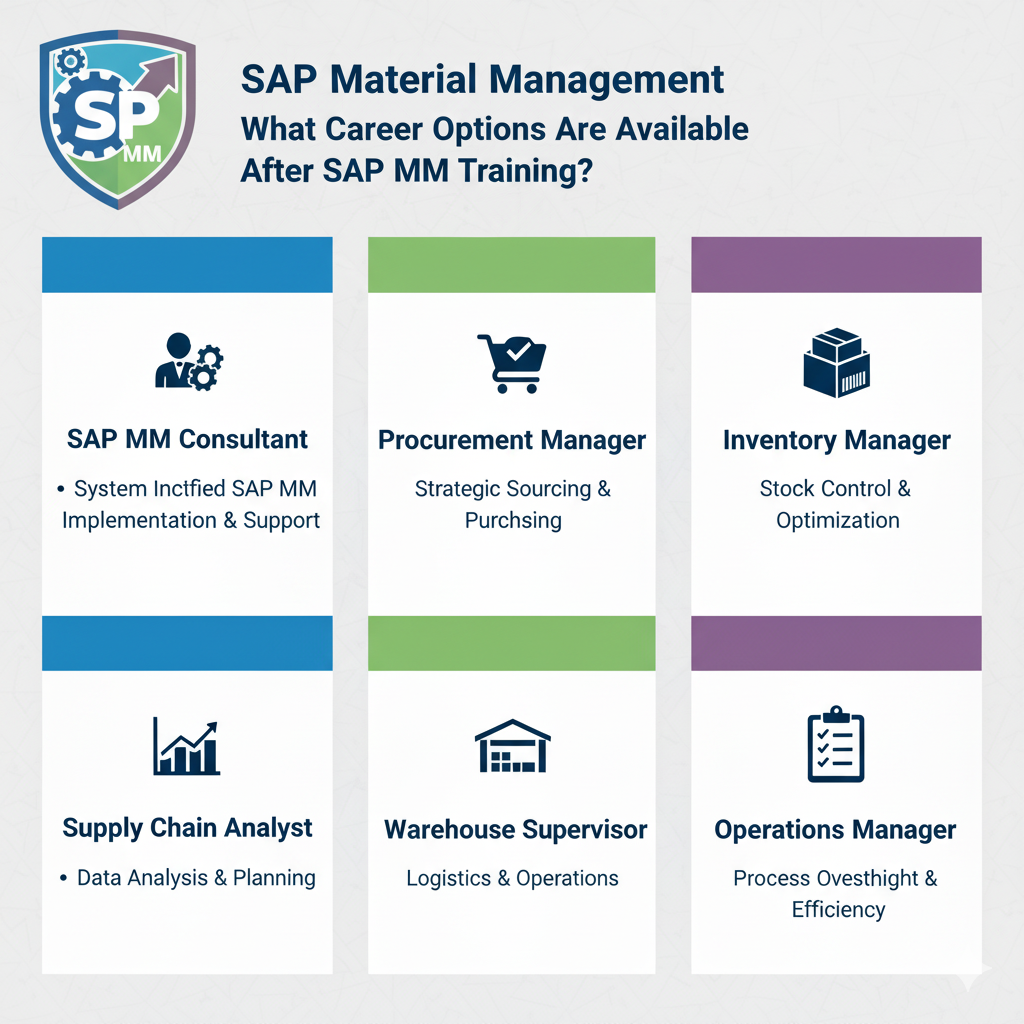
After completing SAP MM training, professionals can explore a wide range of roles, including:
- SAP MM Consultant
- Procurement Manager
- Inventory Manager
- Supply Chain Analyst
- Warehouse Supervisor
- Operations Manager
These roles are available in industries like IT, FMCG, automotive, pharmaceuticals, and e-commerce, making SAP MM a versatile skill.
Which Institutes Provide the Best Material Management Courses with SAP MM?
If you are looking for the best material management courses combined with SAP MM, you should consider institutes that provide:
- SAP-certified training programs.
- Industry-relevant PGDM courses.
- Online and flexible learning modes for working professionals.
In India, institutes offering PGDM in Material Management with exposure to SAP ERP systems provide an added advantage. This ensures that students not only gain technical skills but also understand business strategies and operations.
How Does SAP Material Management Help in Procurement and Inventory Control?
One of the most impactful applications of SAP MM is in procurement and inventory control. With SAP MM:
- Purchase orders and vendor invoices are automated.
- Stock levels are updated in real time.
- Shortages and overstocking issues are minimized.
- Businesses achieve better control over procurement budgets.
- Inventory audits become easier and faster.
This automation leads to higher transparency, cost savings, and smoother operations across the supply chain.
Why Choose MITSDE for Material Management and SAP MM?
For professionals who want to upskill in both managerial and technical aspects of material management, MIT School of Distance Education (MITSDE) is one of the top choices.
- MITSDE offers a PGDM in Material Management that equips learners with advanced knowledge of procurement, logistics, and supply chain strategies.
- The course is designed for working professionals who want flexibility without compromising quality.
- MITSDE provides a curriculum aligned with industry demands, ensuring graduates are ready for roles in SAP MM, supply chain, and operations.
- The institute’s reputation and alumni network make it one of the best platforms for career growth.
By enrolling in PGDM Material Management at MITSDE, learners gain the perfect mix of management education and practical industry exposure.
Final Thoughts
SAP Material Management is no longer just a software skill—it is a strategic tool that drives efficiency, cost savings, and operational excellence across industries. With the right training, certifications, and managerial education, professionals can build strong careers in this domain.
If you’re looking to boost your career in material management and SAP MM, enrolling in MITSDE’s PGDM Material program can be the best decision you make today.