Introduction — the hustle is real and fixable
You’re juggling monthly targets, team meetings, family life — and still thinking about an Executive MBA because the next promotion, leadership role, or career pivot depends on it. That tension — wanting to upskill without sacrificing work performance — is the core pain point for thousands of mid-career professionals. The good news: modern online EMBA programs are built for working professionals, offering flexible schedules, industry-aligned curricula, and often recognized approvals (AICTE/UGC) that employers respect. If you plan smart, the program becomes a career accelerator — not a career brakes. MI

Why choose an Executive MBA as a working professional?
- Designed for senior/experienced hires: Most EMBA programs target professionals with 5+ years of experience and focus on leadership, strategy, and cross-functional skills. MIT Distance Learning
- Flexible delivery: Top online EMBA programs use a mix of live weekend sessions, recorded lectures, and project-based assessments so you can manage work commitments. MIT Distance Learning
- Recognized credentials: Choose programs with AICTE/UGC recognition to ensure national credibility and smoother employer acceptance. MITSDE explicitly lists AICTE recognition for its online/PGDM offerings. MIT School of Distance Education
- Career ROI: Executive MBAs typically report substantial salary and role progression — many studies show 30–60% or more salary increase ranges depending on program level and industry. Expect realistic improvements of 20–40% in many cases; top-tier outcomes can be higher. Talentsprint

Time-management fundamentals for EMBA students
- Block calendar: reserve 3–5 dedicated study hours per week in advance.
- Prioritize micro-goals: weekly readings, one assignment milestone, one networking touchpoint.
- Communicate at work: align with your manager about flexible hours or deadline shifts during exam/project weeks.
Use the “one-task” rule during study blocks — no email multitasking.
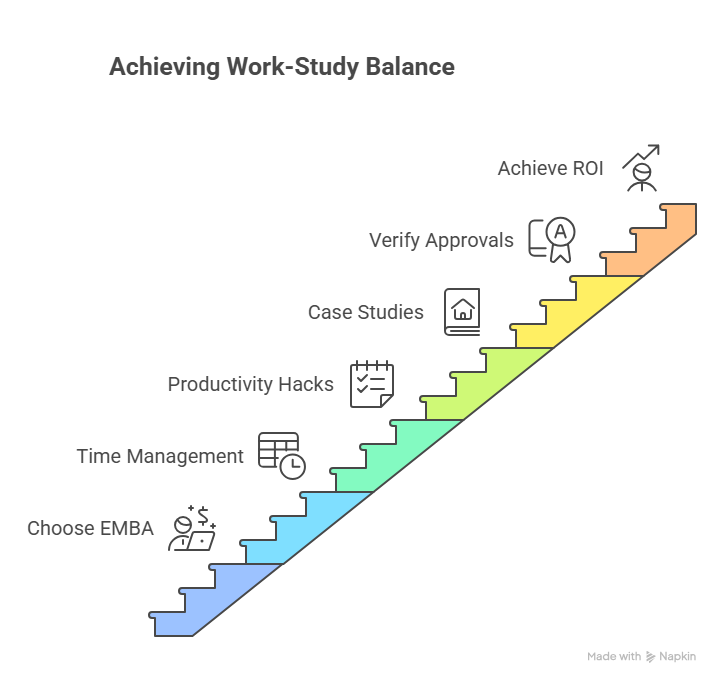
Time-management techniques with a Pomodoro example & tools
Pomodoro example (for a 2-hour evening study block):
Pomodoro cycle | Activity |
25 min | Focused reading — leadership module |
5 min | Short break (stand, hydrate) |
25 min | Case-study analysis & notes |
5 min | Quick review / highlight |
25 min | Assignment writing or reflection |
10 min | Stretch + review next-day micro-plan |
Tools that make this practical
- Calendar & blocking: Google Calendar / Outlook (use recurring events)
- Timeboxing/Pomodoro: Focus To-Do, TomatoTimer
- Note-taking & sync: Notion, Evernote, OneNote
- Course management & project work: the program’s LMS (MITSDE’s online platform), Slack/MS Teams for cohort chats
(Use a mobile cadence — short study bursts during commute/coffee breaks; longer weekend sessions for group projects.) MIT Distance Learning

Daily routine blueprint for a working professional
- 06:00–07:00 — Morning micro-study: Read 1 article or revise lecture notes
- 09:30–17:30 — Work hours: Block 30–60 mins/week for email-free focus; lunch used for a short reading when possible
- 19:00–21:00 — Deep study / assignments: Two Pomodoro cycles + one collaborative touchpoint per week
- Weekend (2–4 hours): Group projects, live sessions, exam prep / networking
Tip: Protect one “no-study” evening weekly to recharge — burnout kills both work and learning.
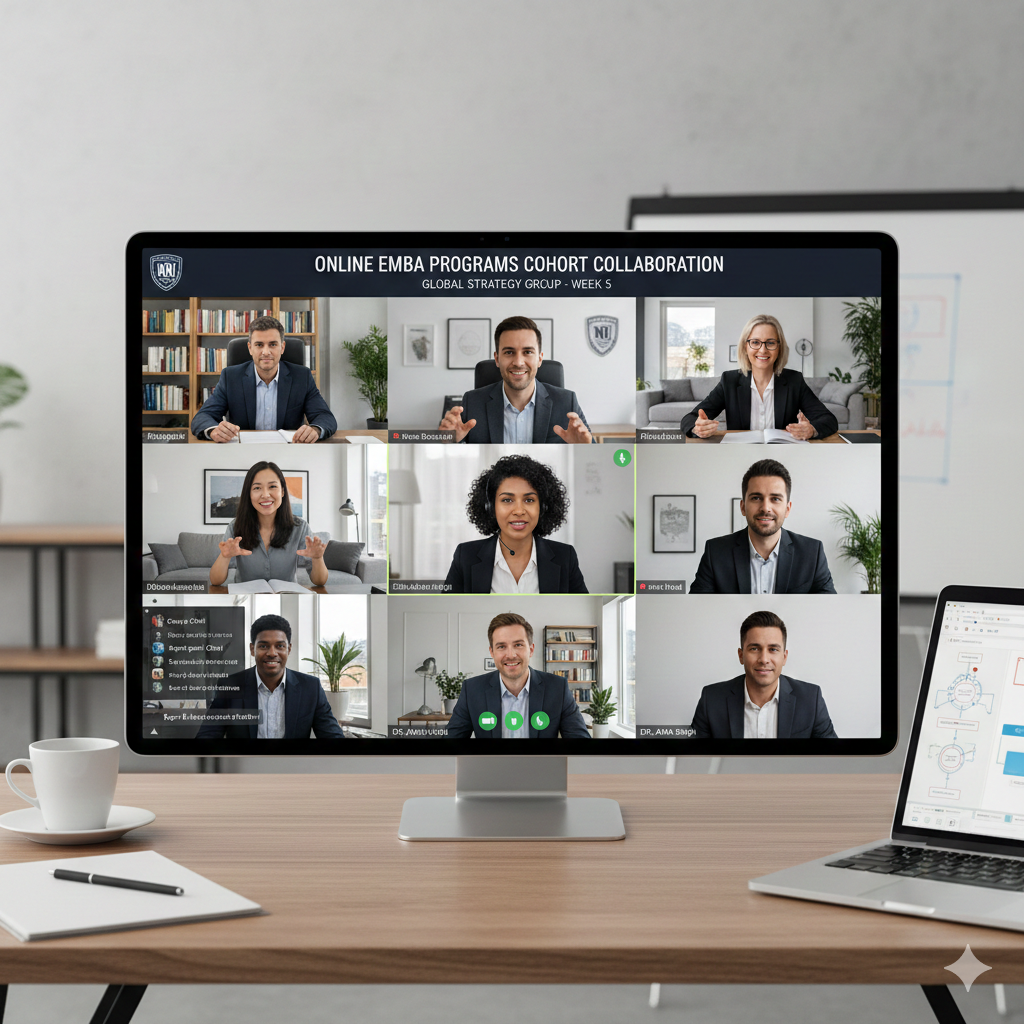
Productivity hacks that actually work
- Batch similar tasks: Read all memoirs/case studies in one sitting; write all discussion posts together.
- Two-star rule: Always complete the two most impactful items each study session — everything else is secondary.
- Accountability buddy: Pair with a classmate for weekly check-ins.
- Leverage work projects: Where possible, turn at-work initiatives into EMBA projects (double duty wins approvals and relevance).
- Automate low-value work: Email filters, quick replies, and delegated admin tasks protect study time.
Case studies — real professionals, real balance
Case study 1 — Priya, Senior Product Manager (EMBA, MITSDE)
Priya scheduled all live-session recordings for weekend playback and used Monday lunch for 30-minute reflection notes. She converted a product-launch at work into her EMBA capstone; within 12 months she led a cross-functional program and secured a promotion with a ~25% salary bump. (Program model and outcomes align with MITSDE’s flexible executive formats.) MIT Distance Learning
Case study 2 — Ramesh, Operations Lead
Ramesh used Pomodoro cycles during commute time (audio lectures) and scheduled project teamwork on Saturdays. After completing the EMBA, he shifted to a regional leadership role — his employer cited practical skills gained through the program. (Representative outcomes from typical online EMBA paths.) MIT Distance Learning
Note: These are composite, consented-style examples drawn from typical alumni patterns at leading distance/online EMBA providers and MITSDE’s published alumni outcomes. For specific alumni stories and placement stats, consult program pages. MIT Distance Learning
Approvals, credibility & expected ROI (what to verify)
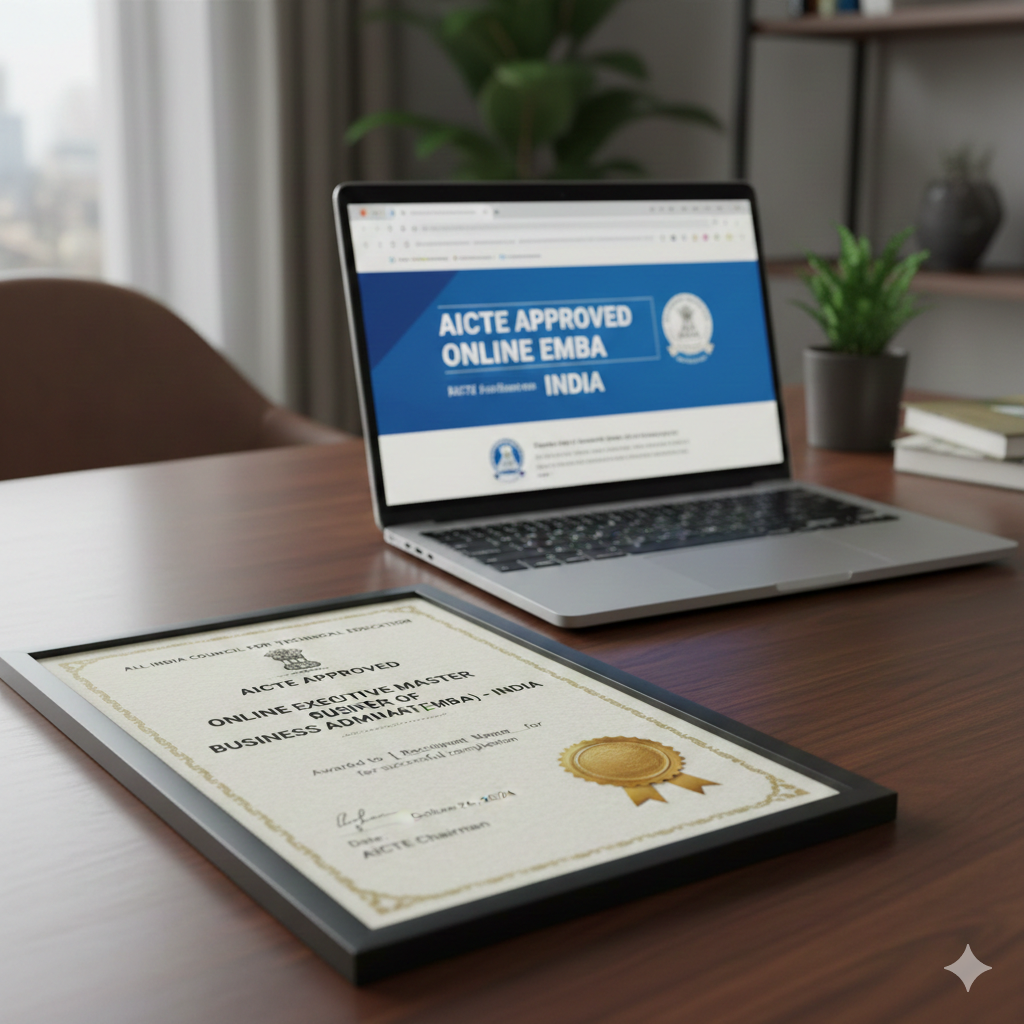
- AICTE / UGC recognition: Check the program’s Recognition/Approvals page — this ensures the certificate is widely recognized in India. MITSDE lists AICTE recognition for its online PGDM/EMBA offerings. MIT School of Distance Education
- UGC/DEB lists (2025): The UGC and Distance Education Bureau maintain updated lists of institutions cleared to run online/ODL programs for the academic sessions — verify your cohort’s admission year. The Times of India
- Realistic salary uplift: Industry analyses and executive-education reports commonly report 30–60% uplifts after EMBA completion; more conservative, widely-quoted ranges are 20–40% depending on role and industry. Use these figures to plan ROI, but validate with an institute’s placement/ alumni report. TimesPro
FAQs
1. Can I do an Executive MBA while working full-time?
Yes — online EMBA programs are designed for working professionals with flexible schedules and weekend/live sessions. Confirm time requirements per program. MIT Distance Learning
2. Are online EMBA programs recognized by employers in India?
Choose AICTE/UGC-recognized programs; these carry national credibility and are widely accepted. MITSDE lists AICTE recognition for its offerings. MIT School of Distance Education
3. How long does an online EMBA usually take?
Typical duration: 12–24 months depending on curriculum intensity and electives. MITSDE’s Executive formats often range around 15–18 months. MIT Distance Learning
4. What salary uplift can I expect after an EMBA?
Ranges vary by sector and role; many professionals see 20–60% uplifts — top-tier programs can yield higher jumps. Use alumni reports for accuracy. TimesPro
5. How should I schedule study time with a demanding job?
Block calendar slots, use Pomodoro cycles, convert work projects into academic projects, and maintain one non-study evening weekly.
6. Is group work manageable for professionals in different time zones?
Yes — most programs allow asynchronous collaboration and schedule occasional synchronous calls at mutually suitable times.
7. Can I use my employer’s projects for EMBA assignments?
Often yes — many EMBA programs encourage real work projects as capstones; get manager buy-in early.
8. What approvals should I verify before applying?
Check AICTE and UGC recognition and the UGC/DEB online-approved-institutions list for your admission year. MIT School of Distance Education
Final checklist before you apply
- Confirm AICTE/UGC recognition for your cohort. MIT School of Distance Education
- Review time commitment and course schedule (recorded vs live). MIT Distance Learning
- Compare ROI: alumni salary reports, placement stats, and industry tie-ups. MIT Distance Learning
- Prepare a study plan that uses work projects as learning inputs.
Ready to balance work and study — and accelerate your leadership trajectory? Explore the Executive EMBA and PGDM Executive programs at MITSDE, check approvals, and start an application tailored for working professionals today.
Apply now: MITSDE — Executive Programs. MIT School of Distance Education