Business analytics is evolving rapidly, reshaping how companies operate and make decisions. As we approach 2025-26, businesses are expected to leverage more advanced analytics tools and techniques to stay competitive. Enrolling in a business analytics course or pursuing a certification can be a game-changer for those wanting to excel in this dynamic field.
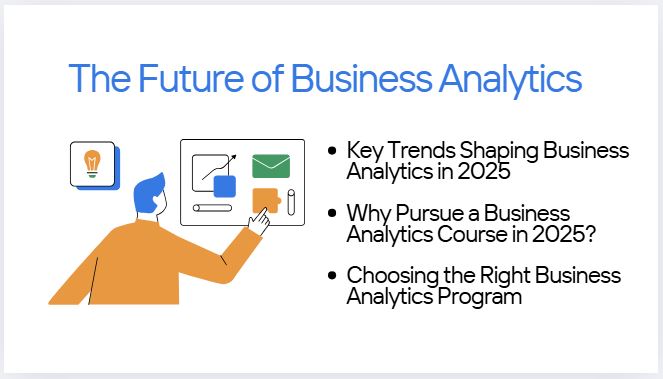
Key Trends Shaping Business Analytics in 2025-26
1. AI-Powered Analytics
- Smarter Insights: AI and Machine Learning (ML) algorithms can analyze large datasets, uncover hidden patterns, and provide actionable insights.
- Automation: Routine tasks like data cleaning, reporting, and anomaly detection will be automated, freeing up human resources for strategic tasks.
- Predictive Capabilities: Businesses will predict market trends, customer behavior, and operational risks using AI-driven predictive analytics.
2. Real-Time Data Analysis
- Instant Decision-Making: Organizations will rely on real-time dashboards and analytics platforms for immediate decision-making.
- Enhanced Customer Experience: Businesses can provide personalized experiences by analyzing customer data in real-time.
- Operational Efficiency: Companies will identify and resolve operational issues promptly using live data insights.
3. Data Democratization
- Self-Service Tools: No-code and low-code analytics platforms will enable non-technical employees to analyze data independently.
- Data Literacy Training: Organizations will invest in training programs to improve data literacy across all levels.
- Collaborative Decision-Making: Employees from different departments will collaborate using shared data insights, leading to more holistic decision-making.
4. Ethical and Responsible AI
- Transparent AI Models: Companies will implement explainable AI systems to ensure decision-making transparency.
- Data Privacy: Stricter data privacy regulations will drive businesses to adopt compliant data management practices.
- Bias Mitigation: Organizations will develop algorithms that minimize bias, promoting fair and ethical AI applications.
5. Cloud-Based Analytics
- Scalability: Cloud platforms offer the flexibility to scale data storage and analytics resources based on demand.
- Cost-Efficiency: Businesses can reduce infrastructure costs by utilizing pay-as-you-go cloud services.
- Remote Collaboration: Teams across different locations can access and analyze data using cloud-based solutions.
Why Pursue a Business Analytics Course in 2025-26?
A comprehensive business analytics course equips professionals with the necessary skills in data analysis, visualization, and predictive modeling. With the right certification, you can demonstrate your proficiency to employers, giving you a competitive edge in the job market.
- In-Demand Skills: Gain expertise in data analysis, machine learning, and visualization tools like Tableau or Power BI.
- Career Advancement: Enhance your resume and become eligible for roles such as Business Analyst, Data Scientist, or Analytics Manager.
- Practical Experience: Many courses offer hands-on projects and case studies, providing real-world experience.
Choosing the Right Business Analytics Program
When selecting a business analytics program, consider the following factors:
- Comprehensive Curriculum: Ensure the program covers AI, ML, and data visualization tools.
- Industry Recognition: Look for certifications from reputed institutions or universities.
- Practical Learning: Choose programs that provide hands-on projects and real-world case studies.
- Flexibility: Opt for online or hybrid options if you need to balance learning with work commitments.
Conclusion
The future of business analytics is exciting and full of opportunities. By enrolling in a business analytics course and earning a certification, you can stay ahead of industry trends and contribute to data-driven success in your organization.
Invest in your career by exploring a reputable business analytics program today and become a valuable asset in the world of analytics!