In a world where global trade is expanding faster than ever, organizations need supply chain professionals who understand how products move from manufacturers to consumers efficiently. This is why the demand for specialists in logistics, transportation, procurement, warehousing, demand planning, and supply chain analytics is witnessing a massive rise.
A PGDM in Logistics and supply chain management has become one of the most sought-after professional qualifications for graduates and working professionals who wish to build or upgrade careers in this rapidly growing field. Whether you are looking to transition into supply chain roles or strengthen your existing domain expertise, a supply chain management course offers you the skills, tools, and industry exposure needed to excel.
This blog gives you a complete overview of the course, including modules, syllabus, and learning outcomes, and concludes with why MITSDE is one of the best institutions to pursue this program.
What Is PGDM in Logistics and Supply Chain Management?
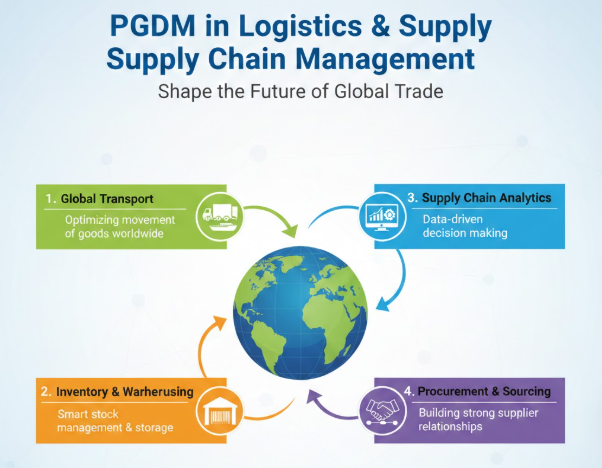
A PGDM in Logistics and Supply Chain Management is a specialized postgraduate program designed to equip students with professional skills to manage end-to-end supply chain operations. The curriculum focuses on procurement, production planning, transportation, warehouse management, international logistics, digital supply chain technologies, and overall supply chain strategy.
It bridges the gap between theoretical understanding and practical application by combining industry-driven modules, case studies, simulation tools, and real-world logistics problem-solving.
Course Details: A Complete Breakdown
1. Program Duration
Most institutions offer the PGDM as a 2-year postgraduate program, divided into four semesters. Working professionals can also opt for a flexible or online format.
2. Core Syllabus & Modules
A PGDM in Logistics and Supply Chain Management consists of well-structured modules that cover every major aspect of supply chain operations. Below is an overview of the typical syllabus:
Semester 1: Business Foundation Modules
These modules help students understand the basics of management, preparing them for advanced supply chain concepts.
- Principles of Management
- Business Communication
- Managerial Economics
- Marketing Management
- Financial Accounting
- Quantitative Techniques
- Organizational Behaviour
These subjects strengthen analytical and decision-making abilities.
Semester 2: Supply Chain Fundamentals
This semester introduces learners to logistics essentials and integrated supply chain concepts.
- Introduction to Logistics Management
- Supply Chain Management Fundamentals
- Inventory and Warehouse Management
- Procurement & Supplier Relationship Management
- Operations Management
- Transportation & Distribution Management
- Import & Export Documentation
Through these subjects, students learn how supply chains operate, how decisions affect cost and performance, and how global trade regulations work.
Semester 3: Advanced Logistics Technologies & Strategy
This semester focuses on digital transformation and strategic planning.
- Logistics Network Design
- Supply Chain Analytics
- Lean Management & Six Sigma
- Enterprise Resource Planning (ERP)
- Digital Supply Chain & Automation
- International Logistics & Global Sourcing
- Risk Management in Supply Chains
Students understand how modern supply chains use robotics, AI, IoT, and automation to improve efficiency.
Semester 4: Industry Applications & Practical Exposure
The final semester prepares learners for real-world roles and strategic leadership.
- Project Management
- Green Supply Chain & Sustainability
- Strategic Supply Chain Management
- Demand Forecasting
- Capstone Project / Internship
- Comprehensive Viva
This stage ensures that learners can apply concepts to real industry scenarios.
Learning Outcomes of PGDM in Logistics and Supply Chain Management
After completing the program, learners develop strong supply chain knowledge and practical industry skills. Key learning outcomes include:
✔ End-to-End Supply Chain Understanding
Students understand the entire supply chain cycle — from material sourcing to final delivery.
✔ Ability to Optimise Costs & Processes
Learners gain skills in inventory optimization, warehouse management, transportation routing, and procurement cost reduction.
✔ Knowledge of Digital Tools
Exposure to tools like ERP systems, analytics dashboards, forecasting software, and warehouse automation platforms.
✔ Global Logistics Awareness
Students learn about incoterms, cross-border logistics, global sourcing strategies, and international documentation.
✔ Improved Problem-Solving & Decision-Making
Case studies, simulations, and projects enable quick analytical thinking in complex logistics environments.
✔ Career Readiness for High-Growth Roles
Graduates are prepared for roles such as:
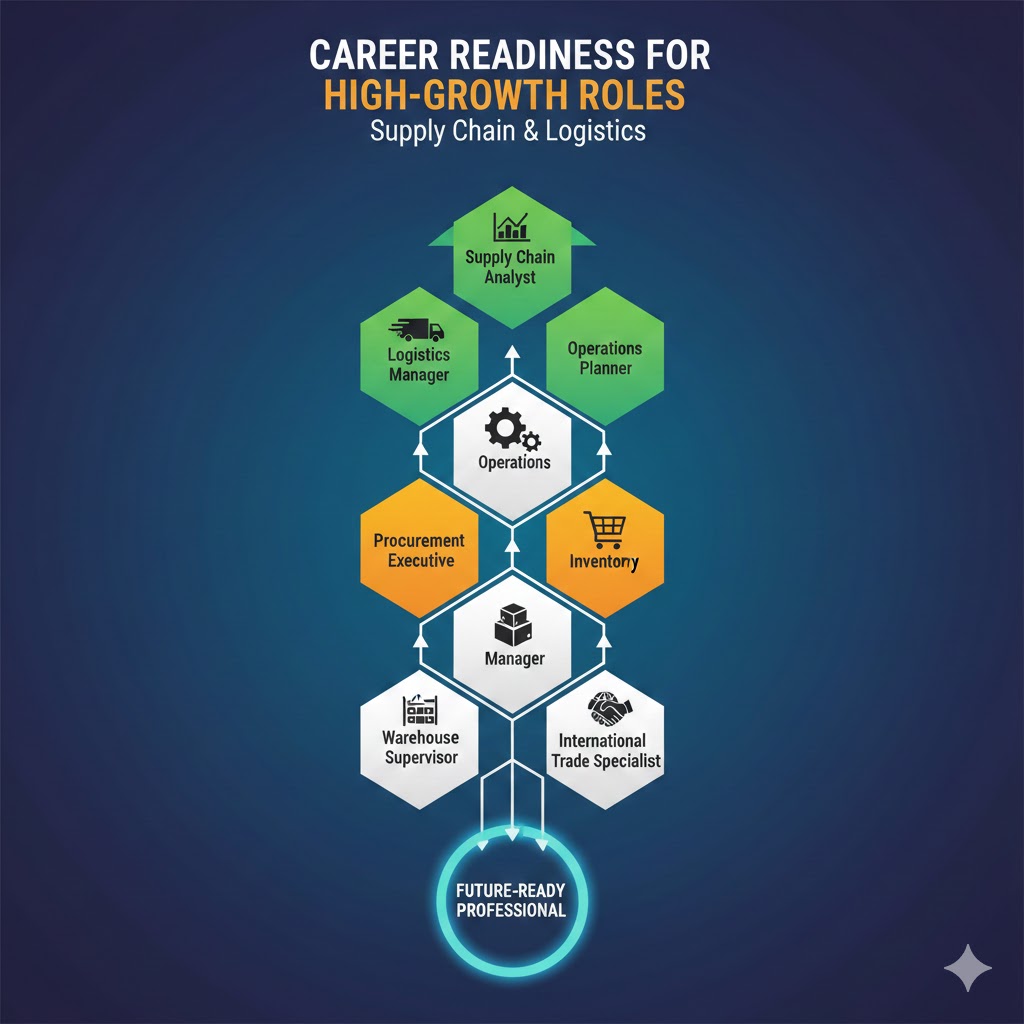
- Supply Chain Analyst
- Logistics Manager
- Operations Planner
- Procurement Executive
- Inventory Manager
- Warehouse Supervisor
- International Trade Specialist
Who Should Enroll in a PGDM in Logistics?
This program is ideal for:
- Graduates wanting to enter the supply chain or logistics
- Working professionals seeking career advancement
- Individuals working in manufacturing, retail, e-commerce, transport, or warehousing
- Anyone looking for a high-growth, global career
Why Choose MITSDE for PGDM in Logistics and Supply Chain Management?
If you want a premium, industry-focused learning experience, MIT School of Distance Education (MITSDE) is one of the top choices for pursuing a supply chain management course.
Here’s what makes MITSDE stand out:
✔ Industry-Relevant Curriculum
The syllabus is designed in consultation with industry experts to align with global logistics trends and technologies.
✔ Flexible Online Learning
Perfect for working professionals, the digital learning platform offers anytime, anywhere access.
✔ Certification from a Reputed Institute
MITSDE is part of the prestigious MIT Group of Institutions, known for quality education across India.
✔ LMS with Recorded Lectures & Study Material
Students get comprehensive e-learning content, practice tests, webinars, and doubt-solving sessions.
✔ Placement Assistance
MITSDE provides career support through resume building, interview preparation, and job assistance.
✔ Practical, Application-Based Learning
Assignments, case studies, and capstone projects ensure real-world understanding.
For those aiming to build a strong career in logistics and supply chain, MITSDE’s PGDM program is a powerful stepping stone to leadership roles.
FAQs
1. Is a PGDM in Logistics good for career growth?
Ans. Yes, logistics and supply chain roles are among the fastest-growing careers globally, offering excellent job opportunities and growth prospects.
2. What is the eligibility for PGDM in Logistics?
Ans. A bachelor’s degree in any discipline from a recognized university. Working professionals also benefit greatly from this specialization.
3. What are the job opportunities after a supply chain management course?
Ans. Career options include Supply Chain Analyst, Logistics Executive, Procurement Manager, Warehouse Manager, Inventory Controller, and Operations Manager.
4. Can working professionals pursue this course?
Ans. Yes, especially with online or distance learning options like those offered by MITSDE.
5. Does MITSDE offer placement support?
Ans. Yes, MITSDE provides placement assistance, industry webinars, mock interviews, and career guidance.