
Choosing a Dual MBA or Dual Degree program is not just an academic decision—it’s a financial investment that can significantly shape your long-term career growth. While these programs offer broader skill sets, global exposure, and accelerated career opportunities, understanding the cost structure, return on investment (ROI), and available scholarships is essential before committing.
This guide breaks down everything you need to know about dual MBA fees, dual degree ROI, and scholarships for dual MBA programs, helping students and working professionals plan their finances wisely.
Understanding Dual MBA and Dual Degree Programs
A Dual MBA allows students to pursue two specializations simultaneously (for example, MBA in Finance + Marketing), while a Dual Degree program enables learners to earn two distinct qualifications (such as MBA + MS or MBA + PGDM).
These programs are designed for:
- Students seeking multi-domain expertise
- Working professionals aiming for career acceleration
- Entrepreneurs looking for strategic and operational depth
While the academic value is high, financial clarity is key to making the right decision.
Dual MBA Fees: What Is the Actual Cost?
1. Tuition Fees Breakdown
The dual MBA fees are typically higher than a single-degree MBA but lower than pursuing two degrees separately.
Average fee range (India & Global Programs):
- Indian institutions: ₹2–8 lakhs (total program cost)
- International or global dual degrees: ₹15–40 lakhs or more
2. Additional Costs to Consider
Beyond tuition, students should plan for:
- Registration and examination fees
- Learning resources and software tools
- International immersion or exchange modules
- Travel and accommodation (if applicable)
👉 Smart insight: Many online and distance dual degree programs significantly reduce these costs while offering comparable learning outcomes.
Is It Worth the Cost? Understanding Dual Degree ROI
1. What Does ROI Mean in Education?
Dual degree ROI measures how quickly and effectively your educational investment converts into:
- Higher salary
- Better job roles
- Faster promotions
- Expanded career options
2. Salary Growth After Dual Programs
Graduates of dual MBA or dual degree programs often see:
- 25–60% salary hike within 1–3 years
- Eligibility for leadership, consulting, and cross-functional roles
- Access to global and niche job markets
Popular high-ROI combinations include:
3. Long-Term Career Advantage
Unlike single-specialization degrees, dual programs offer career resilience. If one industry slows down, your second specialization keeps you competitive—boosting long-term ROI.
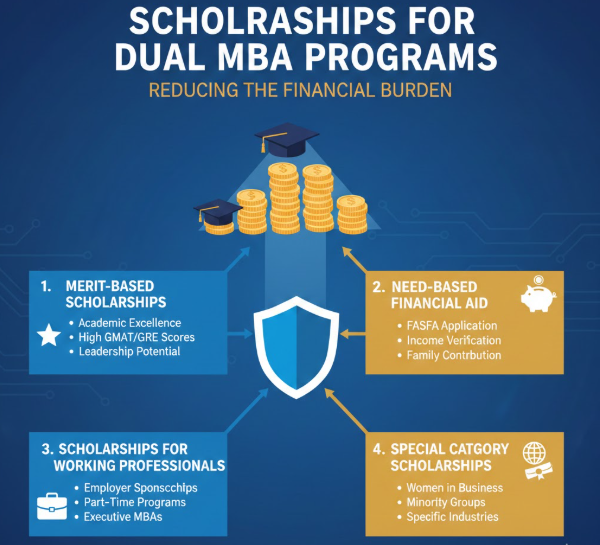
Scholarships for Dual MBA Programs: Reducing the Financial Burden
One of the most overlooked aspects of financial planning is scholarships for dual MBA programs. Many institutions offer financial aid based on merit, need, or professional background.
1. Merit-Based Scholarships
Awarded to students with:
- Strong academic records
- High entrance exam scores
- Consistent professional achievements
2. Need-Based Financial Aid
Designed for students who demonstrate:
- Financial constraints
- Family income eligibility
- Supporting documents for verification
3. Scholarships for Working Professionals
Many institutes encourage upskilling by offering:
- Corporate-sponsored scholarships
- Fee concessions for experienced professionals
- Installment-based payment plans
4. Special Category Scholarships
Some programs also offer benefits for:
- Women professionals
- Defense personnel
- Entrepreneurs and startup founders
👉 Pro tip: Applying early significantly improves your chances of securing scholarships or fee waivers.
Education Loans & Flexible Payment Options
If scholarships do not fully cover costs, students can explore:
- Education loans with low interest rates
- EMI-based fee payment plans
- Employer reimbursement programs
Several institutions partner with banks and NBFCs to make dual MBA fees more manageable without compromising learning quality.
How to Maximize ROI from a Dual MBA or Dual Degree
To ensure the best dual degree ROI, students should:
- Choose complementary specializations aligned with career goals
- Opt for industry-relevant curricula with real-world projects
- Build strong professional networks during the program
- Apply learnings directly at work (especially for professionals)
Who Should Invest in a Dual Program?
A Dual MBA or Dual Degree is ideal if you:
- Want faster career progression
- Plan to switch roles or industries
- Aim for leadership or managerial positions
- Seek better global or cross-functional exposure
When backed by proper financial planning, the returns often outweigh the initial costs.
Final Thoughts: Plan Smart, Invest Smarter
A Dual MBA or Dual Degree program is a powerful career accelerator—but only when supported by informed financial planning. By understanding dual MBA fees, evaluating dual degree ROI, and exploring scholarships for dual MBA programs, you can make a confident, future-ready decision.
Frequently Asked Questions (FAQs)
1. Are dual MBA fees much higher than a regular MBA?
Ans. Dual MBA fees are higher than a single MBA but significantly lower than pursuing two separate degrees individually.
2. What is the average dual degree ROI?
Ans. Most graduates recover their investment within 2–4 years through salary hikes, promotions, or role transitions.
3. Are scholarships available for dual MBA programs?
Ans. Yes, many institutions offer scholarships for dual MBA based on merit, financial need, or work experience.
4. Can working professionals apply for scholarships?
Ans. Absolutely. Several programs provide fee concessions and flexible payments for working professionals.
5. Do online dual degree programs offer good ROI?
Ans. Yes. Online and distance dual degrees often provide excellent ROI due to lower costs and continued earning during study.
6. Is a dual degree better than two separate degrees?
Ans. Financially and strategically, a dual degree is usually more cost-effective and time-efficient.
7. Can I pay dual MBA fees in installments?
Ans. Most institutions offer EMI options or semester-wise payments to reduce financial pressure.
8. How do I choose the best dual program for ROI?
Ans. Select programs aligned with industry demand, practical exposure, and long-term career goals.