What is an Executive MBA in HR Management?
An Executive MBA in HR Management opens doors to senior HR leadership roles such as HR Manager, Talent Acquisition Lead, L&D Head, HR Business Partner, and Compensation & Benefits Manager. Designed for working professionals, this program accelerates career growth, leadership responsibility, and earning potential in people-centric roles.
Why Is an Executive MBA in HR Management a Smart Career Move?
The workplace is evolving rapidly, and organizations today need HR leaders who can align people strategies with business goals. An Executive MBA in Human Resources is tailored for professionals who already have work experience and want to transition into strategic, decision-making HR roles.
Unlike traditional HR programs, an online executive MBA in HR management focuses on leadership, analytics, organizational behavior, and business strategy—skills that are critical for senior HR positions.
What Career Opportunities Are Available After an Executive MBA in HR?
Graduates of an executive MBA HR program are eligible for a wide range of mid-to-senior-level roles across industries such as IT, manufacturing, healthcare, BFSI, consulting, and startups.
These roles are not limited to administrative HR functions but extend to strategic leadership positions that directly impact organizational growth.
Around 70% of MBA graduates secure employment in their chosen industry within six months of graduation, highlighting the strong market relevance of MBA and Executive MBA programs. This reflects employers’ preference for professionally trained managers with leadership and strategic skills.
How Does an Executive MBA in HR Help You Become an HR Manager?
An HR Manager plays a pivotal role in managing workforce planning, performance management, employee relations, and compliance.
After completing an executive MBA in HR management, professionals gain:
- Advanced knowledge of HR policies and labor laws
- Strategic workforce planning skills
- Leadership and people management capabilities
- Exposure to HR analytics and decision-making frameworks
This makes them well-equipped to handle complex HR responsibilities at a managerial level.
Average Salary Range: ₹6–12 LPA (can go higher with experience)
What Does a Talent Acquisition Lead Do After an Executive MBA in HR?
Talent acquisition today goes beyond hiring—it’s about building future-ready teams. An Executive MBA in Human Resources equips professionals with strategic hiring, employer branding, and workforce forecasting skills.
As a Talent Acquisition Lead, you will:
- Design recruitment strategies aligned with business goals
- Lead hiring teams and vendor partnerships
- Use data-driven hiring and HR analytics
- Improve candidate experience and retention
This role is ideal for HR professionals looking to specialize in recruitment leadership.
How Can an Executive MBA in HR Lead to an L&D Head Role?
The role of a Learning & Development (L&D) Head has become critical as companies invest heavily in upskilling and reskilling their workforce.
An online executive MBA in HR management prepares professionals to:
- Identify skill gaps and training needs
- Design leadership development programs
- Manage learning budgets and ROI
- Drive organizational capability building
This role is perfect for professionals passionate about employee growth and organizational learning.
What Opportunities Exist as an HR Business Partner After an Executive MBA?
An HR Business Partner (HRBP) works closely with leadership teams to align HR strategies with business objectives.
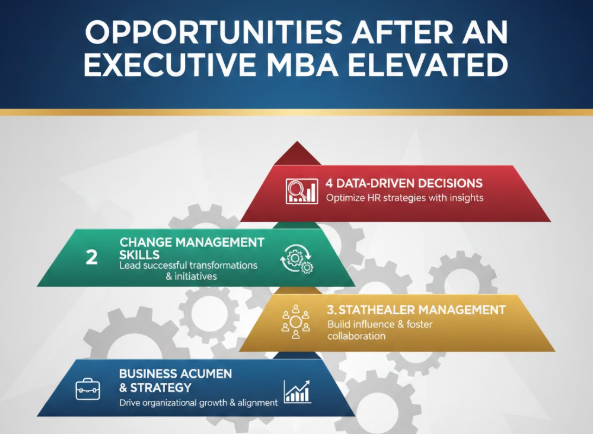
With an executive MBA HR, professionals develop:
- Business acumen and strategic thinking
- Change management expertise
- Stakeholder management skills
- Data-backed decision-making ability
HRBP roles are highly valued in large organizations and multinational companies.
Can You Build a Career in Compensation & Benefits After an Executive MBA in HR?
Yes. Compensation & Benefits (C&B) is a specialized and high-impact HR function.
After completing an Executive MBA in Human Resources, professionals can move into roles such as:
- Compensation Manager
- Rewards & Benefits Analyst
- Payroll Strategy Lead
These roles involve designing competitive salary structures, incentive plans, and employee benefits that attract and retain top talent.
How Does an Online Executive MBA in HR Management Support Career Growth?
One of the biggest advantages of an online executive MBA in HR management is flexibility. Working professionals can upskill without taking a career break.
Key benefits include:
- Continued income while studying
- Immediate application of learning at work
- Faster promotions and role transitions
- Strong leadership and strategic exposure
This makes it an ideal choice for mid-career professionals aiming for leadership roles.
Which Industries Hire Executive MBA HR Professionals?
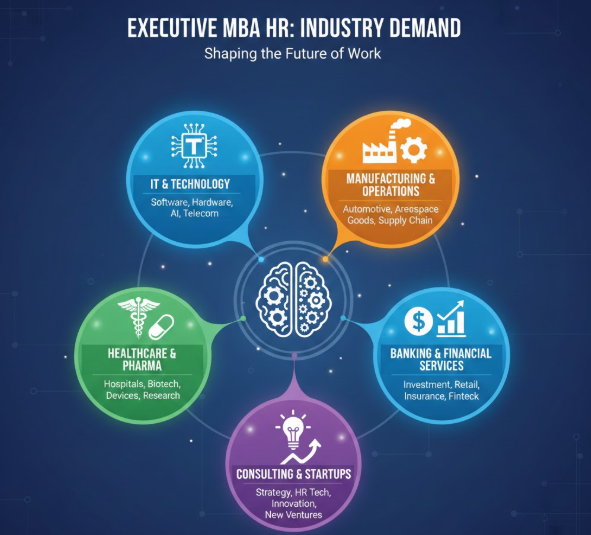
An executive MBA HR is highly versatile and relevant across industries such as:
- IT & Technology
- Manufacturing & Operations
- Healthcare & Pharma
- Banking & Financial Services
- Consulting & Startups
Every industry needs strong HR leaders to manage talent, culture, and performance.
Is an Executive MBA in Human Resources Worth It for Working Professionals?
Absolutely. If you are looking to move beyond operational HR tasks into leadership and strategic roles, an Executive MBA in Human Resources is a powerful career investment.
It not only enhances your professional credibility but also prepares you for long-term leadership positions in HR.
FAQs: Career Opportunities After an Executive MBA in HR Management
1. What is the best job after an executive MBA HR?
Ans. HR Manager, HR Business Partner, and Talent Acquisition Lead are among the top roles.
2. Can fresh HR professionals pursue an executive MBA in HR management?
Ans. This program is best suited for working professionals with prior experience.
3. Is an online executive MBA in HR management valuable?
Ans. Yes, it is widely accepted and ideal for career advancement without quitting your job.
4. What salary can I expect after an executive MBA in human resources?
Ans. Salaries typically range from ₹6–15 LPA depending on role and experience.
5. Does an executive MBA HR help in leadership roles?
Ans. Yes, it is specifically designed to build leadership and strategic HR skills.
6. Can I move into L&D roles after this program?
Ans. Yes, many graduates become L&D Managers or Heads.
7. Is executive MBA HR suitable for career switchers?
Ans. Yes, especially for professionals moving into strategic HR roles.
8. Which companies hire executive MBA HR graduates?
Ans. MNCs, large enterprises, consulting firms, and growing startups actively hire them.