Table of Contents
- What Is an HR Course?
- Why Should You Consider HR Courses in Mumbai?
- What Career Opportunities Are Available After HR Courses?
- Which Entry-Level HR Jobs Can Freshers Get in Mumbai?
- What Skills Are Required for HR Jobs in Mumbai?
- Which HR Tools Should You Learn During an HR Course?
- How Do HR Courses Help You Build a Career in Mumbai?
- How Do You Choose the Right HR Course in Mumbai?
- How Long Does It Take to Complete an HR Course?
- How Can You Choose an HR Course Based on Your Career Goal?
- Conclusion
- FAQs
Key Takeaways
- HR courses teach essential workforce management skills, including recruitment, onboarding, training, payroll, performance management, employee relations and HR analytics.
- Mumbai offers HR career opportunities across banking and financial services, IT, consulting, manufacturing, healthcare, retail, media, hospitality and startups.
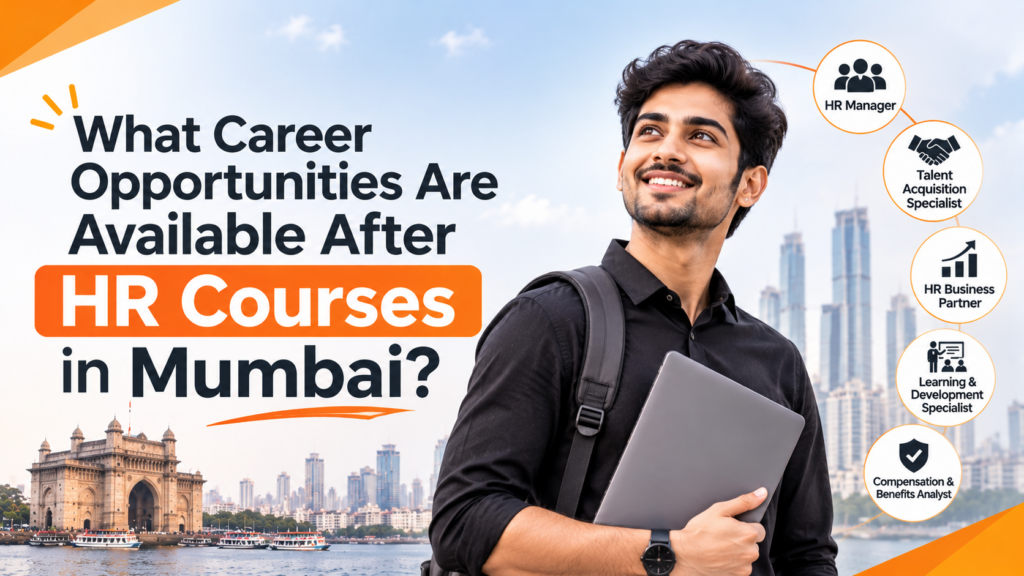
- Career paths include HR trainee, HR executive, recruiter, talent acquisition specialist, HR generalist, payroll assistant, HR analyst and HR manager.
- Freshers can improve their job readiness through internships, practical assignments, communication skills, recruitment knowledge and a role-specific CV.
- HR professionals need technical skills in HR information systems, applicant tracking systems, payroll tools, spreadsheets and analytics, alongside communication, empathy, confidentiality and conflict resolution.
- An HR course can strengthen practical knowledge and interview readiness, but completing one does not guarantee employment.
- An MBA in HR is not essential for every role. Qualifications depend on the employer, position, experience and long-term career goals.
- When selecting an HR course, compare the curriculum, practical learning, faculty, certification, technology training, career support, duration, format and fees.
- Different career goals require different learning priorities, from recruitment and HR fundamentals for freshers to analytics, workforce planning and leadership for aspiring managers.
- MIT School of Distance Education (MIT SDE) offers HR-related programmes, including a PGDM in Human Resource Management, HR analytics training and Executive Human Capital Management options. Candidates should verify current programme details and recognition before enrolling.
HR Courses prepare students, fresh graduates and working professionals for careers in recruitment, HR operations, employee relations, payroll, training and HR analytics. Mumbai’s corporate headquarters, financial services firms, IT companies, and recruitment agencies employ HR professionals in entry-level, specialist, and managerial roles, depending on qualifications and experience.
HR management is crucial across industries, as effective training helps people learn recruitment and management techniques through hands-on experience. In this article, we discuss opportunities for graduates and professionals, along with advice on choosing a course that supports your career.
What Is an HR Course?
An HR course teaches how to manage recruitment, onboarding, training, performance management, compensation, employee relations and other workforce functions.
What Do You Learn in an HR Course?
HR fundamentals, recruitment and talent acquisition, onboarding, training and development, performance management, compensation and benefits, engagement, labour laws and compliance, HR analytics, HR information systems (HRIS) and employee relations.
Why Should You Consider HR Courses in Mumbai?
Mumbai is home to corporate offices, multinationals, banks, IT services companies, consulting agencies, retail chains, media houses, and staffing firms. As a result, there is demand for recruitment and people-management expertise, along with internships and networking opportunities. As of 10 February 2026, Maharashtra has the largest number of start-ups in India: 17.0 per cent of total start-ups in the country. Hence, learners comparing HR Courses in Mumbai should focus on the syllabus, exposure, and other support.
Which Industries Hire HR Professionals in Mumbai?
BFSI, IT and software, consulting, manufacturing and engineering, healthcare and pharma, retail and e-commerce, media and entertainment, hospitality, logistics and startups.
What Career Opportunities Are Available After HR Courses?
HR courses can prepare you for entry-level, specialist and managerial roles, depending on qualifications, practical experience and course depth.
What Does an HR Executive Do?
An HR executive’s responsibilities include maintaining employee files, assisting with recruitment, recording and documentation, responding to HR queries, managing absenteeism and holidays, and helping implement HR policies.
What Does a Recruiter or Talent Acquisition Specialist Do?
Recruitment specialists define hiring requirements, post job openings, screen candidates’ CVs, and more.
What Does an HR Generalist Do?
Supports multiple HR functions, including recruitment, onboarding, documentation, performance reviews, employee relations, training and policy implementation.
What Does an HR Manager Do?
Develops HR strategy, manages workforce planning, supervises teams, oversees performance management and engagement, and advises business leaders. It generally requires relevant experience as well as education.
Which Entry-Level HR Jobs Can Freshers Get in Mumbai?
With HR basics, communication skills, and hands-on experience, newcomers can consider roles such as HR Trainee, HR Intern, HR Assistant, HR Executive, Recruitment Coordinator, Talent Acquisition Associate, Payroll Assistant, Training Coordinator, HR Operations Associate, and Employee Engagement Coordinator.
How Can Freshers Prepare for HR Jobs?
Learn the fundamentals of HR and the hiring process, develop communication skills, train as an interviewer, gain experience as an HR intern, become skilled in spreadsheets and HR software, and write a CV suitable for the role.
What Skills Are Required for HR Jobs in Mumbai?
HR professionals need people-management ability, administrative accuracy, communication, compliance awareness and technology skills.
- Technical: applicant tracking systems, HRIS, payroll basics, spreadsheets, HR reporting and analytics, employee documentation and knowledge of applicable employment regulations.
- Soft skills: communication, active listening, conflict resolution, empathy, negotiation, organisation, confidentiality, time management and ethical decision-making.
Which HR Tools Should You Learn During an HR Course?
Familiarity with HR software helps you understand recruitment, employee records, payroll, reporting and administration.
- Recruitment tools: applicant tracking systems, recruitment platforms, resume databases and interview scheduling tools.
- HR systems: HRIS, payroll, attendance and leave tools, performance platforms and learning management systems.
- Analytics: time to hire, turnover, recruitment cost, engagement and training effectiveness.
Software varies by employer, so focus on transferable skills alongside platform familiarity.

How Do HR Courses Help You Build a Career in Mumbai?
Structured training builds foundations, practical experience and job readiness.
Can an HR Course Help You Get a Job in Mumbai?
It builds HR, recruitment and documentation skills, gives practical assignments, and helps with resumes, interviews and internships. Completing a course does not guarantee employment, and hiring requirements vary by employer.
Is an MBA in HR Necessary for a Career in Human Resources?
Not universally. Some roles accept undergraduate qualifications, while certain employers prefer postgraduate HR education, so weigh internships, practical experience and long-term goals.
Are HR Certifications Useful for Career Growth?
They add specialised knowledge in recruitment, operations, compliance and analytics, especially when the issuing organisation is recognised.
What Factors Affect HR Salaries in Mumbai?
Qualifications, experience, technical and communication skills, specialisation, industry, employer size, certifications, HR technology experience and leadership responsibilities.
How Do You Choose the Right HR Course in Mumbai?
Compare these criteria across your shortlist.
Factor | What to Look For |
Curriculum | Recruitment, employee relations, payroll, operations, analytics |
Course type | Certificate, diploma, postgraduate programme or MBA |
Practical learning | Case studies, assignments, simulations, projects |
Faculty and certification | HR expertise; recognised issuer relevant to target roles |
HR technology | HRIS, recruitment tools, reporting software |
Career support | Resume help, interview preparation, placement guidance |
Duration, format, fees | Suited to your schedule, eligibility and total cost |
- Practical experience: recruitment simulations, resume screening, documentation tasks, engagement case studies and analytics projects.
- Current practices: digital recruitment, hybrid workforces, employee experience, diversity and inclusion, and compliance.
- Career support: mock interviews, counselling, internship assistance and networking.
How Long Does It Take to Complete an HR Course?
HR course timelines range from short certificates to diplomas, postgraduate programmes, and MBAs, and from classroom to self-paced formats. Duration affects curriculum depth, practical learning, recognition and eligibility for target roles, so check each programme’s current duration.
How Can You Choose an HR Course Based on Your Career Goal?
- Fresh graduates: fundamentals, recruitment, onboarding, assignments and internships.
- Working professionals: flexible schedules, advanced practices, analytics and leadership.
- Aspiring recruiters: sourcing, screening, interview coordination and applicant tracking.
- Aspiring HR analysts: spreadsheets, reporting, workforce analytics and visualisation.
- Aspiring HR managers: strategy, workforce planning, performance management and leadership.
- Entrepreneurs: hiring, onboarding, documentation and workplace policies.
Conclusion
In Mumbai, many HR opportunities are available, including recruitment, operations, payroll, learning, relations, and analytics. HR Courses in Mumbai are crucial for gaining relevant, up-to-date knowledge. An institution like MIT SDE is definitely worth consideration. Through this institution, you can pursue an AICTE-approved PGDM in Human Resource Management, along with a 40-hour course in HR analytics. There is also an option for a PGDM in Executive Human Capital Management, with placement assistance and HR certification. Confirm current details on each programme page.
FAQs
-
1. What career opportunities are available after completing HR courses in Mumbai?
Recruitment, HR operations, payroll, training, employee relations and analytics roles.
-
2. What are the most popular HR job roles for freshers in Mumbai?
HR Trainee, HR Executive, Recruitment Coordinator and Talent Acquisition Associate.
-
3. Can I get an HR job in Mumbai after completing a short-term HR course?
It can improve readiness for entry-level roles, but employers set their own requirements.
-
4. What qualifications are necessary to embark on a career in human resources in Mumbai?
Qualifications depend on the employer and position type, ranging from a degree for entry-level roles to a master’s degree for senior management roles.
-
5. What is the average salary of individuals having finished HR courses in Mumbai?
Salaries can vary widely depending on the position and experience; follow current job advertisements in your field.