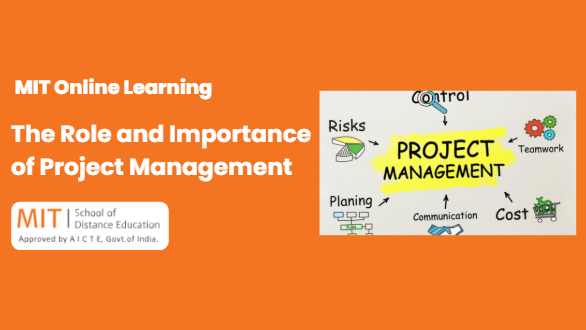
In today’s fast-paced business environment, organizations operate in highly competitive markets where efficiency, timely delivery, and quality outcomes decide success. Whether it is a multinational company launching a new product, a government body implementing an infrastructure project, or a software firm developing a new application, one element binds all these activities together—Project Management.
Project management is the structured approach of planning, executing, monitoring, and closing projects to achieve specific goals. It ensures that objectives are met within the constraints of time, cost, scope, and quality. Without project management, even the most innovative idea may fail to materialize effectively.
Let us explore why project management is vital, how it impacts industries, and why professionals must gain expertise in it.
Why is Project Management Important
Project management provides a framework that ensures projects are delivered successfully. But why exactly is it important? Here are some key reasons:
- Clear Goal Alignment – Project management defines clear objectives, helping teams understand what needs to be achieved and how to reach there.
- Efficient Resource Utilization – It optimizes time, budget, and workforce to maximize productivity without wastage.
- Risk Management – Every project involves uncertainties. Effective project management identifies, assesses, and mitigates risks before they escalate.
- Better Collaboration – Project managers create communication plans, ensuring smooth coordination between cross-functional teams.
- Quality Control – By setting standards and monitoring deliverables, project management ensures outcomes meet expectations.
- Client Satisfaction – Timely delivery of projects within budget increases trust and client confidence.
Without structured project management, organizations risk delays, budget overruns, misaligned priorities, and dissatisfied stakeholders.
The Impact of Project Management is Most Profound In
While project management benefits every industry, some sectors experience its impact more profoundly:
- Construction & Infrastructure 🏗️
Large-scale construction projects, such as highways, metro systems, or skyscrapers, require detailed planning, resource allocation, and strict deadlines. Project management ensures smooth execution, cost control, and safety compliance. - Information Technology (IT) 💻
The IT sector thrives on innovation and fast-paced product development. Project management ensures software and hardware projects meet client requirements, stay within deadlines, and adapt to technological changes. - Healthcare 🏥
Implementing healthcare systems, medical research, and hospital infrastructure demands precise planning. Project management improves efficiency, reduces errors, and ensures compliance with regulations. - Manufacturing & Operations ⚙️
From supply chain optimization to production line upgrades, project management helps manufacturing companies achieve operational excellence and competitive advantage. - Marketing & Business Strategy 📊
Project management plays a crucial role in launching marketing campaigns, conducting market research, and aligning business strategies with organizational goals. - Education & Training 🎓
Institutions rely on project management for curriculum design, e-learning platforms, and academic infrastructure projects. It ensures timely delivery of education services with quality outcomes.
Thus, project management is not just about finishing projects but about creating sustainable value for organizations and stakeholders.
The Importance of Project Management has Increased Due To
The relevance of project management has surged in recent years. Several global and industry-specific factors have contributed to this rise:
- Globalization of Businesses – Organizations are expanding globally, requiring cross-border project coordination. Project management ensures smooth execution across different geographies.
- Technological Advancements – Emerging technologies such as Artificial Intelligence, Automation, and Data Analytics have added complexity to projects, making structured management essential.
- Remote & Hybrid Work Models – Post-pandemic work models require efficient digital project management tools and practices.
- Customer-Centric Market – Clients expect faster delivery and high-quality outcomes, increasing the need for streamlined project execution.
- Sustainability Goals – Environmental and social responsibility have become integral to project planning, requiring managers to balance business needs with ethical practices.
- Increased Competition – In today’s market, speed and efficiency are critical. Companies adopting project management methodologies like Agile, Scrum, and Lean gain a competitive edge.
As businesses grow more complex, structured learning through a Post Graduate Diploma in Project Management helps professionals adapt to these new-age challenges with confidence and expertise.
Discuss the Importance of Project Management
When we discuss the importance of project management, it is essential to view it from three perspectives: organizational, team, and individual.
- For Organizations
- Provides strategic alignment with business goals.
- Improves return on investment (ROI).
- Reduces wastage of resources and time.
- For Teams
- Enhances collaboration among members.
- Provides clarity of tasks and responsibilities.
- Boosts motivation through measurable milestones.
- For Individuals
- Enhances leadership and problem-solving skills.
- Increases career growth opportunities.
- Provides recognition as a critical contributor to organizational success.
Discussing project management also highlights its role in innovation. By providing structure, it allows organizations to experiment with new ideas while minimizing risks. This balance between creativity and control is the hallmark of effective project management.
Why is Software Project Management Important
Among all industries, software project management deserves special mention because of its unique challenges. Unlike physical projects, software projects are intangible, constantly evolving, and highly complex. Here’s why it is important:
- Frequent Changes – Clients often demand modifications during development. Project management frameworks like Agile accommodate these changes without derailing timelines.
- Time-Sensitive Deliverables – Software projects need to be delivered quickly to stay competitive in fast-changing markets.
- Cross-Functional Teams – Developers, testers, designers, and business analysts must work together seamlessly, which project management enables.
- Quality & Security – Project managers ensure that applications are not only functional but also secure and scalable.
- Cost Control – By breaking projects into manageable phases, software project management prevents budget overruns.
In fact, tech companies prefer candidates who have professional certifications or structured training, such as a Diploma in Project Management, since it equips them with agile and modern methodologies essential in IT environments.
MITSDE: Building Future-Ready Project Managers
To truly harness the benefits of project management, professionals need the right knowledge, tools, and practical exposure. This is where MIT School of Distance Education (MITSDE) plays a vital role.
MITSDE offers specialized programs designed to prepare professionals for dynamic project management roles across industries. Its courses combine theoretical learning with real-world applications, equipping learners to confidently handle complex projects.
MITSDE Courses in Project Management:
- PGDM in Project Management – A comprehensive program covering advanced project management concepts, leadership skills, and industry-relevant methodologies. Ideal for graduates and working professionals aiming for managerial roles.
- PGDM Executive in Modern Project Management – Tailored for experienced professionals, this course focuses on modern tools, strategies, and agile practices for large-scale projects.
- Professional Certification in Project Management – A short-term certification that enhances practical skills and provides global recognition in project management.
By enrolling in these programs, learners not only gain knowledge but also acquire industry-ready expertise that accelerates career growth.
Conclusion
Project management is the backbone of successful organizations. It brings clarity, efficiency, and structure to complex tasks while ensuring customer satisfaction and long-term value creation. From construction to IT and healthcare to marketing, its importance cannot be overstated.
As industries move toward a project-based economy, skilled project managers are in high demand. With the right training and exposure, you can become part of this growing field and shape the future of organizations worldwide.