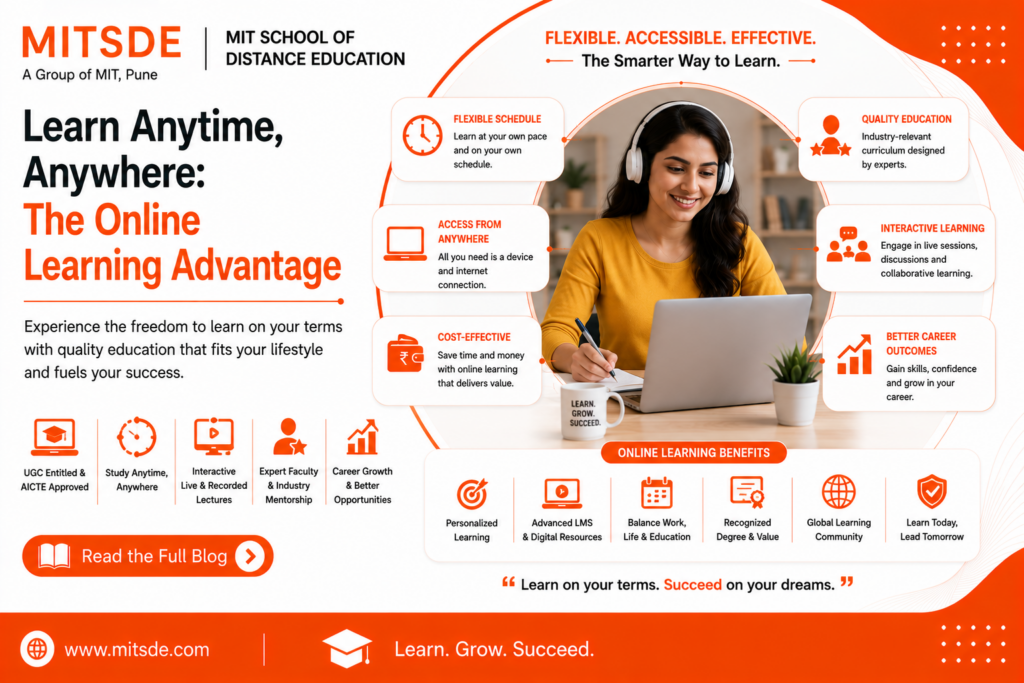
Online learning offers 3 core advantages: flexibility (study anytime, at your own pace, without geographical limits), collaboration (real-time tools like Google Classroom and Microsoft Teams enable discussion and group work), and rich digital content (interactive material, video lectures, and online forums). Genuine challenges remain, including unequal access to technology (the digital divide) and the need for robust student data security — both of which responsible distance learning institutes must actively address.
Table of Contents
- Revolutionizing Education: The Power of Online Learning
- A World of Knowledge at Your Fingertips
- Boosting Collaboration and Engagement
- Emerging Immersive Learning Technologies
- Challenges and Considerations
- The Future of Education
- FAQs
Revolutionizing Education: The Power of Online Learning
The world is changing fast, and keeping your skills up-to-date is crucial for career success. Technology has revolutionized higher education, making high-quality learning more accessible than ever before. Online learning through distance learning programs offers a flexible, engaging way to hone your skills and advance your career without getting in the way of work or personal life.
Gone are the days of rigid schedules and geographical limitations. Online learning platforms let you learn anytime, anywhere, at a time that suits your busy schedule — whether that means studying for a PGDM course during your commute or tackling modules late at night when you’re most focused.
A World of Knowledge at Your Fingertips
No more heavy textbooks and dusty libraries — online postgraduate programs are packed with interactive content, video lectures, and online forums for peer discussion.
Platforms offering distance learning programs typically provide a wide library of courses across various disciplines, letting you explore new areas, deepen existing knowledge, or become an expert in a specific field — entirely online.
Boosting Collaboration and Engagement
Online distance learning isn’t just about learning by yourself. Technology creates a dynamic learning space where students and teachers can connect and work together easily.
Tools like Google Classroom and Microsoft Teams let learners chat in real-time, share resources, submit assignments, and receive feedback efficiently. This makes learning more collaborative, similar to a traditional classroom but with added flexibility.
Discussion boards, group projects, and virtual classrooms also make learning dynamic — helping develop communication, teamwork, and critical thinking skills, all important for success in today’s job market.
Emerging Immersive Learning Technologies
Beyond static textbooks and traditional lectures, the broader online education industry is increasingly exploring technologies like Virtual Reality (VR) and Augmented Reality (AR) to create more immersive learning experiences for example, virtually exploring historical sites or interactively visualizing complex concepts. These technologies aim to bring subjects to life in ways that go beyond conventional teaching methods.
Note: The specific availability of VR/AR features varies by institute and program — check directly with your chosen provider regarding which specific technologies are integrated into a given course.
Challenges and Considerations
While online learning offers real benefits, it’s important to acknowledge genuine challenges:
- The Digital Divide — not everyone has equal access to the technology or reliable internet needed for online learning
- Data Security — ensuring the security of student data is paramount for any distance learning institute
Distance learning colleges have a responsibility to bridge the digital divide and prioritize robust cybersecurity measures. Addressing these challenges seriously is essential to creating a genuinely inclusive and secure online learning environment.
The Future of Education Is Here
The intersection of technology and education through distance education courses continues to transform how we learn, offering a combination of flexibility, affordability, and quality empowering learners to take charge of their professional development.
FAQ's
-
1. What are the main advantages of online learning?
Flexibility (study anytime, at your own pace, from anywhere), collaboration tools that enable real-time interaction with peers and instructors, and access to rich, interactive digital content.
-
2. How does online learning support collaboration despite being remote?
Tools like Google Classroom and Microsoft Teams enable real-time chat, resource sharing, and assignment submission, while discussion boards and virtual classrooms support group projects and dynamic interaction.
-
3. What are the main challenges of online learning?
The digital divide (unequal access to technology and reliable internet) and ensuring robust security for student data are the two most significant, ongoing challenges.
-
4. Are VR and AR commonly used in online postgraduate programs?
Some online education providers are exploring VR/AR for immersive learning experiences, but availability varies significantly by institute and program — always verify with your specific provider.
-
5. How can distance learning institutes address the digital divide?
By actively working to bridge unequal technology access and prioritizing affordable, accessible program design alongside strong cybersecurity measures.
-
6. What skills does online learning help develop beyond subject knowledge?
Communication, teamwork, and critical thinking skills, built through discussion boards, group projects, and virtual classroom collaboration.